Is Your Facade Paint Not Resisting Salt Efflorescence?
If you’re reading this, you’ve probably noticed white stains, peeling paint, or efflorescence on your building’s facade — clear signs of a problem that goes beyond a simple repaint. In this article, I will explain why your facade paint doesn’t resist salt efflorescence, and what it really takes to solve the problem at its root. As a specialist in facade remodeling with BuilditNow, I want you to be well-informed to ensure quality, durability, and a strong impression of commitment to excellence.
What is “salt efflorescence” and why it damages paint
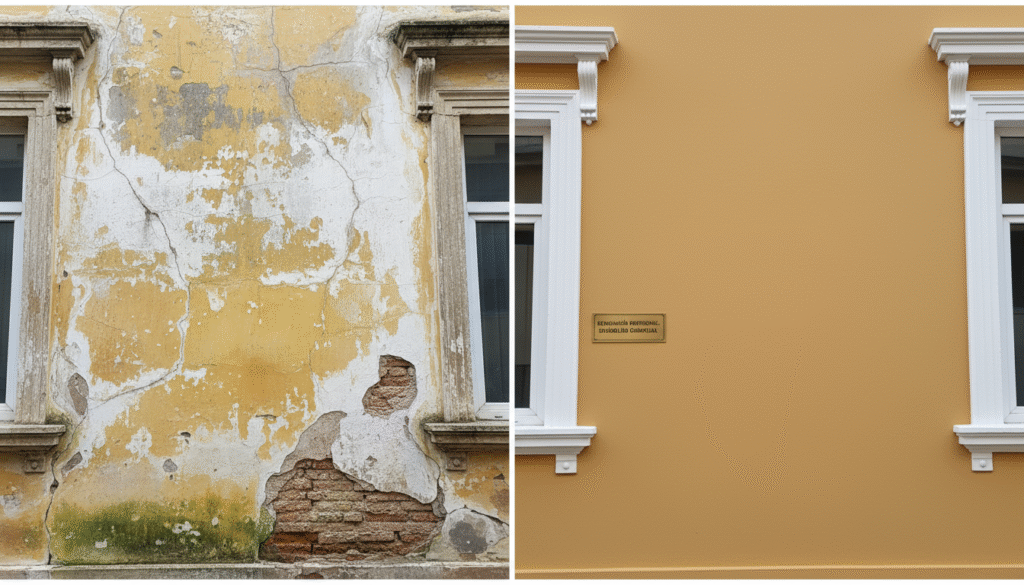
The phenomenon we call “salt efflorescence” is actually the appearance of mineral salts (mainly nitrates, potassium, sodium) that rise or migrate through masonry or plaster. The typical process is: moisture enters or rises through the wall → carries salts → salts reach the surface and crystallize or form efflorescence → plaster or paint loses adhesion → stains, peeling, or bubbles appear. (tintasepintura.pt)
Key points to understand:
- Rising or capillary damp: water coming from the ground through the building materials is a common cause. (murprotec.pt)
- Lateral leaks or poor drainage near the base of the wall also favor the problem. (tintasepintura.pt)
- Porous walls, inadequate plaster, or lack of waterproofing make the system more vulnerable. (forumdacasa.com)
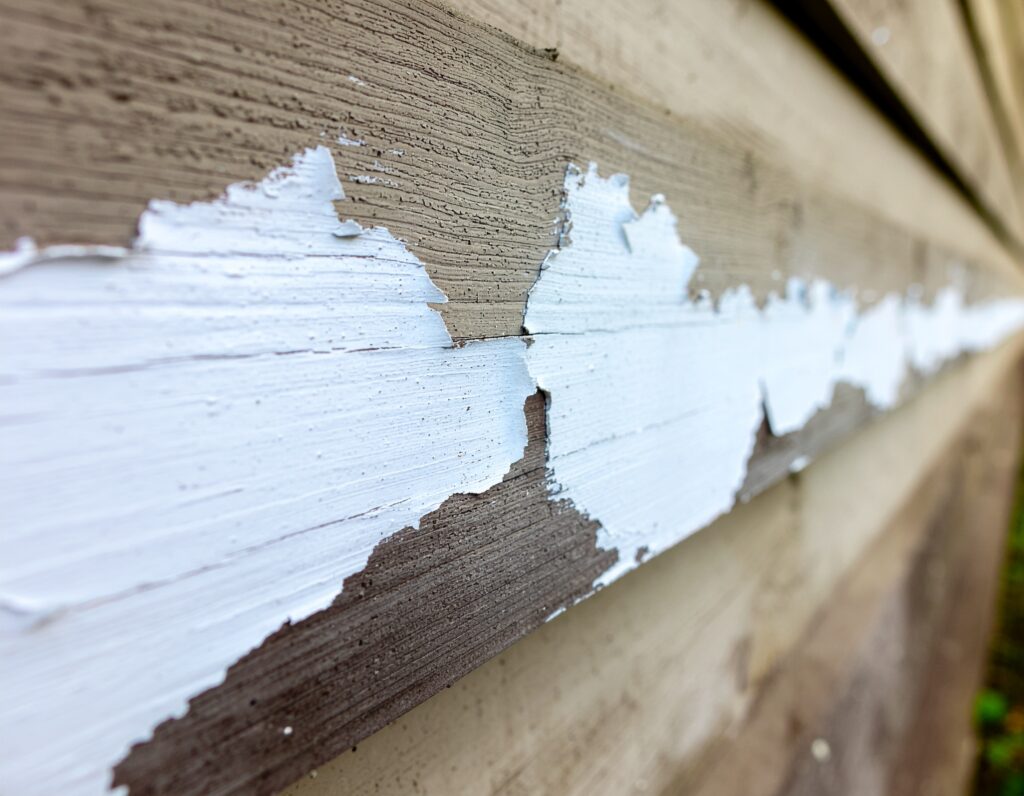
- Paint fails not necessarily because of poor quality but often because the wall itself is compromised, and moisture/salts push or dissolve the paint.
Ignoring the source of moisture and salts makes repainting only a temporary fix — the problem will return.
Is Your Facade Paint Failing Due to Salt Efflorescence? Common Mistakes:
When a client asks me, “Why is my paint peeling all of a sudden?” we usually find some recurring errors:
1. Painting without treating moisture or salt
Applying new paint without removing or treating moisture or salts in the masonry is like putting a band-aid on a broken bone. The salts keep migrating to the surface and force the paint to detach. (barbot.pt)
2. Lack of proper barrier or base insulation
If the base of the wall near the ground or foundation isn’t waterproofed, or water accumulates near the wall, moisture easily enters. (tintasepintura.pt)
3. Using standard paints instead of systems for moisture-affected walls
There are specific “anti-salt” primers and paints for walls with rising damp. Using a standard paint without considering wall pathology drastically reduces durability. (barbot.pt)
4. Weak or poorly prepared wall support
Loose plaster, cracks, or old drainage — if the support fails, the paint above it will fail too. (tintasepintura.pt)
5. Poor ventilation or exposure
Walls with little ventilation or that trap moisture (for example, due to new window installations) increase salt efflorescence risk. (murprotec.pt)
How to ensure your facade paint lasts
To make facade paint resist salt efflorescence and wear, the procedure must follow a structured path. Here are the steps BuilditNow follows and I recommend to all clients:
Step 1: Diagnosis and identification of moisture source
- Check for rising or lateral damp.
- Inspect external drainage and water accumulation near the wall.
- Examine plaster condition for visible salts, blisters, or efflorescence. (murprotec.pt)
- Measure residual moisture and visually confirm efflorescence signs. (tintasepintura.pt)
Step 2: Treatment or elimination of moisture and salts
- Rising damp: install a horizontal waterproof barrier or inject special resins (e.g., Sika Mur InjectoCream‑100). (prt.sika.com)
- Lateral water: fix drainage, slope surfaces, add gutters or drains. (tintasepintura.pt)
- Remove damaged plaster, clean the wall, prepare the base properly. (barbot.pt)
Step 3: Wall preparation for painting
- Apply an anti-salt primer or sealer after moisture/salts are under control. (barbot.pt)
- Apply plaster or mortar compatible with moisture-affected walls, allowing wall breathability. (tintasepintura.pt)
- Ensure the wall is dry before painting — a damp wall compromises the finish.
Step 4: Paint selection and correct application
- Use high-quality exterior paints resistant to moisture and salts.
- Paint under proper conditions (temperature, humidity, avoid direct sun or rain).
- Follow the recommended number of coats.
- Perform periodic maintenance (visual inspections, cleaning, minor repairs) to extend lifespan.
Step 5: Maintenance and monitoring
- Check yearly for signs of moisture, salts, or peeling.
- Ensure exterior facade drainage remains effective.
- Repair cracks, leaks, or seal failures promptly to prevent recurrence.
Why investing in proper facade treatment makes sense
As the owner of BuilditNow, I want to emphasize that this investment is not just “doing it right” — it creates value, reliability, and a reputation for quality. Benefits include:
- Longer-lasting paint and facade, reducing future interventions and maintenance costs.
- Enhanced aesthetics and perceived quality — crucial for clients from the UK or USA expecting premium finishes.
- Protects the building from more severe issues (mold, structural leaks) that could lead to complaints or reputation loss.
- Allows you to advertise a “durable, salt-resistant facade” system in your marketing, reinforcing commitment to quality.
FAQ – Quick Answers
Q: Does “anti-salt” paint solve everything?
A: No. If moisture/salt sources aren’t addressed, “anti-salt” paint is only a temporary fix. The full system (waterproofing, base treatment, primer, paint) is what makes the difference.
Q: Can I just paint over a salt-affected wall and see if it works?
A: High risk of rapid failure. Salt acts from underneath and will compromise the new finish. Treat first, then paint.
Q: How long does a properly treated facade paint last?
A: Depends on exposure, material quality, and maintenance. If the support and moisture are controlled, life expectancy can be 10–15 years or more.
Q: In large hotel remodels, where do I start?
A: Conduct a preliminary moisture/salt diagnosis, map affected areas, plan treatment + painting schedule, and budget for the complete system. This shows professionalism and avoids surprises.
Conclusion
If your facade paint isn’t resisting salt efflorescence, the common mistake is focusing only on the finish while ignoring the root cause: moisture, salts, and compromised wall support. With BuilditNow, you have a partner who understands that quality and durability are more than a promise — they’re a practice. By treating the support correctly, preparing the wall, and using the right painting system, your facade will be protected and look top-notch. Schedule a free inspection and renovation consultation with our expert team.