
Two renovation quotations arrive with different totals, but it is not yet clear whether they describe the same work. One includes an item that the other leaves for later clarification. A material selection may be settled in one proposal and remain an allowance in another. Comparing the final sums before identifying those differences can answer the wrong question.
The useful first step is to establish what each quotation actually covers. The following comparison method is a planning suggestion for property owners, not a contractual assessment or a promise about any particular contractor’s documentation. Its aim is to turn unclear boundaries into questions that can be answered before a decision.
Start with one shared description of the project
Keep the brief, drawing references and selection notes that each contractor received. If different versions went to different people, record that discrepancy before comparing their responses. A change in the requested scope can explain a difference in the proposals without saying anything about the quality of either business.
List the areas and activities that matter to your project. For a bathroom, that might include removing existing fittings, preparing surfaces, supplying selected items, installation and clearing the work area. These are comparison headings, not a specification for how the work should be carried out. Technical requirements need to be defined with the appropriate project professionals.
Separate described work from items awaiting a decision
For each heading, copy the wording or a precise reference from each quotation. Distinguish a clearly described inclusion, an explicit exclusion, an allowance and an item that is not mentioned. An omission is a question to resolve, not proof that the contractor intends to charge extra or has deliberately lowered the total.
Where an allowance appears, ask what it includes and how a later selection would affect the proposal. Is the amount for supply only, or does it include installation and associated work? Which selection or quantity underlies it? Use the answer to understand the comparison rather than treating every allowance as though it described an identical product.
Use a hypothetical mismatch to test the comparison
Imagine two proposals for a bathroom alteration. One expressly includes supplying a mirror and fitting it. The other mentions fitting a client-supplied mirror but says nothing about purchasing it. Their totals cover different responsibilities. The comparison should show that boundary before the owner decides which proposal better matches the intended project.
The same example can raise another question: does either description include the agreed lighting connection around the mirror? Do not assume that it does because a finished bathroom photograph shows lighting. Ask for the intended scope to be confirmed. This hypothetical example illustrates a reading method; it is not a case history, a cost calculation or a recommended technical solution.
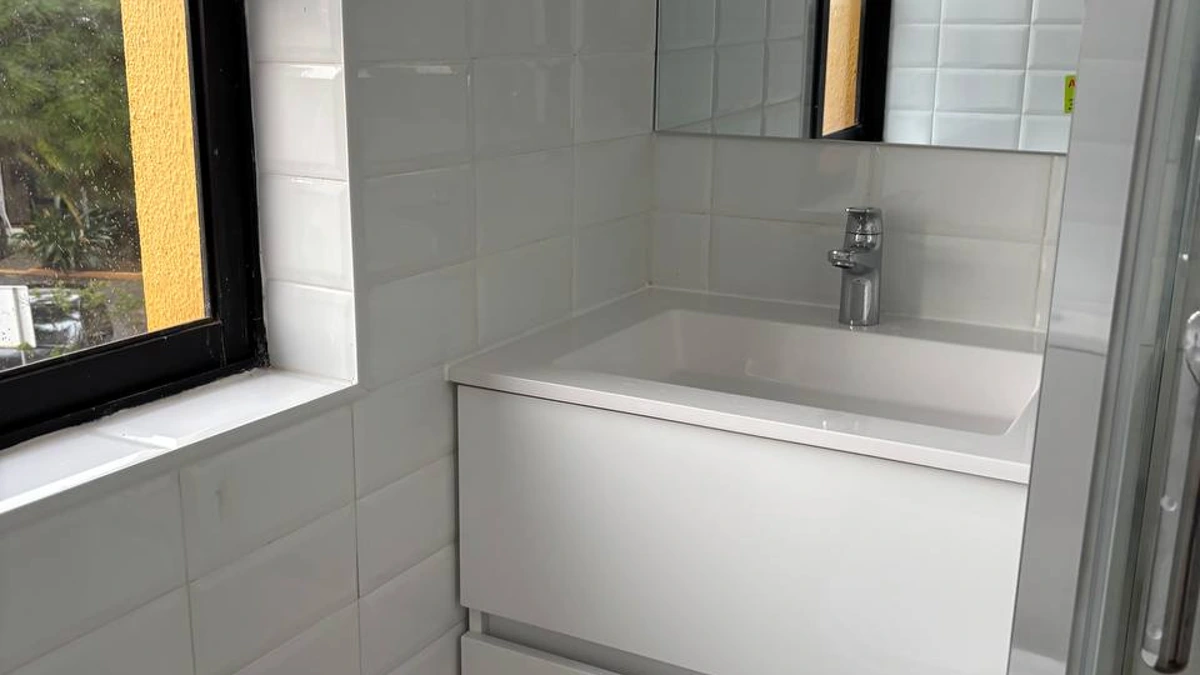
The Alfagar photograph accompanying this article shows a completed bathroom detail as architectural context. It does not establish what was included in a quotation, which products were specified or how any contractual responsibility was allocated. A photograph and a written scope answer different questions.
Make interfaces and exclusions visible
Look for responsibilities that sit between headings: access arrangements, protection of retained finishes, delivery handling and removal of waste, where relevant to the project. Ask which party is responsible and where that responsibility is recorded. Do not infer that every possible item must be included in every renovation proposal.
Check whether the descriptions use the same quantities, locations and drawing revisions. A line referring to one wall cannot be compared directly with a line covering the whole room. Where the wording remains broad, ask for the physical start and end of the work to be described. Keep the original text alongside the clarification so that a paraphrase does not silently change its meaning.
Read commercial conditions without turning them into a score
Review how the proposal describes payment stages, validity, changes and items still to be agreed. Note the questions you need answered and seek appropriate advice where the implications are unclear. A clear description makes discussion easier, but it does not by itself prove that a contract is balanced or that a contractor will perform well.
Avoid ranking proposals through a homemade points system that hides unresolved differences. It is more useful to record that an inclusion is confirmed, an alternative remains open or a condition needs professional review. A total should remain attached to the scope and conditions that produced it, rather than being copied into a comparison without those qualifications.
Ask for a comparable revision before choosing
Send a concise list of clarification questions and identify the quotation version to which they refer. When a response changes the scope, request a revised document or a clearly linked written clarification. Keep earlier versions available without treating them as current. You should be able to explain which proposal and which answers support the decision.
Build It Now can be contacted to discuss an Algarve renovation brief. Preparing a consistent description of the intended work makes that conversation more concrete. The purpose of this exercise is not to make every quotation identical, but to understand the differences before deciding what to commission.