
Bathroom lighting: plan the mirror separately from the decorative fitting
Published on 18 November 2026
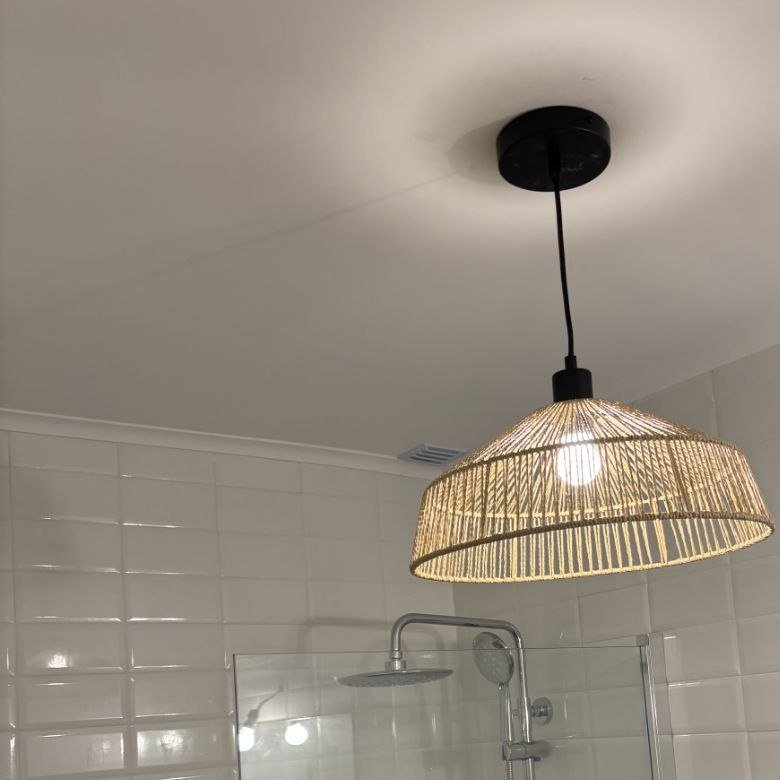
A pendant light can be the first thing you notice in a bathroom photograph, while the light you need at the mirror remains an afterthought. Those are different decisions. Before selecting a fitting for an Algarve renovation, work out what you want to see clearly, what atmosphere you want to create and which questions need an electrician’s assessment. A beautiful shade is a starting point, not a complete lighting plan.
The useful distinction is between light for everyday tasks, light for moving around the room and light chosen for its decorative effect. One fitting may contribute to more than one purpose, but do not assume that its appearance tells you how well it will serve all three. Describe each purpose before asking the project team to recommend an arrangement.
Start at the mirror, not in the lighting catalogue
Think about an ordinary morning. You may shave, apply make-up or check your appearance at the basin. Record what is difficult in the existing room: perhaps your face appears unevenly lit, or you find yourself leaning towards a brighter patch. These observations are more useful than an instruction to copy a pendant from a reference photograph.
Discuss the mirror, its position and the intended lighting together. A mirror cabinet, a framed mirror and a larger wall-mounted mirror leave different space for fittings and access. Ask how the proposed arrangement will illuminate the person using it, rather than judging the effect on the empty room alone. Keep product selection open until the relevant dimensions and installation constraints have been checked.
Give decorative light a clear job
A decorative pendant or wall light can bring texture, warmth or a visual focal point to a bathroom. That is a legitimate purpose. Problems arise when a preference for the fitting silently becomes an assumption that it will also provide all the light needed for grooming and general use.
In the Alfagar photograph, the woven shade is the visual subject. Use it to explain a preference for a material or an atmosphere, not as evidence that the same fitting belongs in another bathroom. The photograph does not identify its product specification, the concealed installation or the measured light reaching a mirror. Your own selection needs to be considered in its proposed location.
Describe the situations, then discuss the controls
Make a short list of the situations the room needs to support. For example, a hypothetical household might want clear mirror lighting in the morning and a softer atmosphere while getting ready for bed. That does not automatically mean a particular dimmer, a smart control or separate circuits. It gives the electrician a practical question to resolve.
If you are discussing bathroom changes with Build It Now, bring this list alongside the layout and preferred fittings. Ask which parts of the lighting discussion depend on information that is still missing. The aim is to avoid choosing a control for one product and later discovering that a replacement product requires the proposal to be reconsidered.
Look at the finishes with the light switched on
White tiles, a painted ceiling and a textured shade can look different under different light and at different times of day. Where a sample or a demonstration is available, look beyond the fitting itself. Notice reflections in the mirror, bright points that catch your eye and whether the effect suits the way you expect to use the room.
A demonstration away from the property is a reference, not a prediction of the finished result. Record what you liked about it: the appearance of the shade, the softness of the effect or the colour impression. This is more helpful than calling a fitting “warm” and assuming that everyone understands the same combination of brightness, colour and material.
Leave bathroom electrical suitability to the assessment
Do not infer suitability from a shop photograph, a bathroom label or a fitting already installed elsewhere. Ask a qualified electrician to assess the proposed position, the product information and the installation requirements for this room. Avoid fixing a location or buying a decorative fitting on the assumption that the technical detail can be settled afterwards.
The same conversation should cover how the fitting can be reached for cleaning and replacement. If a shade, driver or light source needs future attention, ask what access would be required. These are questions to resolve before committing to a selection, not instructions to alter wiring or open existing equipment yourself.
Confirm the combination before the order
Before ordering, check that the product reference, mirror arrangement and intended use still describe the same proposal. Keep a clear distinction between an attractive alternative and the selection being assessed. If a product changes, ask whether the lighting effect, controls or installation assumptions need another look.
The result you are working towards is not simply a striking bathroom photograph. It is an agreed combination in which the mirror lighting, general use and decorative effect have each been considered. Starting with those separate jobs makes the discussion more precise and leaves fewer decisions hidden inside a single choice of lampshade.