
A supplier confirms that a kitchen appliance is available, but one practical question remains unanswered: can its delivery package reach the place where it needs to wait? A product width copied from a catalogue is not necessarily the width of its packaging. A clear doorway is only one point along a route that may include a gate, a turn, a stair landing and a shared entrance.
Before ordering bulky materials for an Algarve renovation, bring those questions into the delivery discussion. The aim is to identify missing information before a vehicle is booked, not to design a lifting operation yourself. The appointed delivery team and the people managing the works need to assess the actual item and site conditions.
Ask for the delivery package, not just the product size
Request the supplier’s transport information for the exact item being ordered. Ask about packed dimensions, weight, pallet or crate arrangements and any handling restrictions supplied with the goods. Keep that information distinct from the dimensions used to design the finished installation. Both matter, but they answer different questions.
For example, a hypothetical appliance might fit its intended kitchen recess while arriving in packaging that cannot follow the assumed route. That does not establish that removing the packaging is an acceptable solution. Ask the supplier and appointed handlers what the permitted arrangements are before treating an unpacked measurement as a delivery plan.
Describe the route from the vehicle to the holding area
Identify where the vehicle is expected to stop and where the delivery service ends. Ask the supplier whether its offer covers unloading, movement beyond the property boundary, movement upstairs or only a specified external drop-off point. Do not assume that the word delivery includes all of those activities.
Then describe the proposed route with the people assessing it. Gates, steps, corners, overhead restrictions and changes in level can matter as much as the final doorway. Measurements and photographs can help them understand the question, but they do not establish floor capacity, safe handling or permission to use a shared space. Those points need the relevant assessment and confirmation.
Resolve shared-space questions before booking
Where access crosses a condominium or another party’s land, ask the building manager or relevant owner which arrangements apply. Check the actual rules rather than assuming that a delivery slot, lift or communal corridor is available. If the proposal involves equipment or unloading on public space, ask the responsible project professional or local authority what permissions are needed.
A preferred date is not an agreed access arrangement. Record what has been confirmed, what remains unresolved and who is obtaining the answer. Avoid booking an irreversible transport commitment on the strength of a message that only confirms stock availability.
When discussing an Algarve renovation with Build It Now, bring the supplier’s delivery description and the access questions to the project conversation. That gives the discussion a concrete starting point without assuming that transport, unloading or storage is included in a particular quotation.
Choose somewhere the delivery can wait
The final installation position may not be ready when goods arrive. Ask where the packaged items can be held, who will assess the proposed location and what conditions the manufacturer specifies for storage. Keep circulation and emergency routes available. Do not treat an empty room or terrace as suitable simply because it appears to have spare space.
Consider the next deliveries as well. An early crate can block the route needed by a later one, while packaging may occupy space after the goods are moved. Discuss how that material will be removed and who is responsible. The practical question is whether the proposed holding area works within the actual sequence, not whether every order can arrive as soon as it becomes available.
Confirm the receiving contact and the handover point
Agree who will be present, how the driver can contact them and what should happen if access differs from the confirmed information. The receiving person needs the order reference and the delivery arrangements, rather than only a product photograph. Ask the supplier how shortages, visible transport damage or an unsuccessful delivery should be reported under its terms.
Keep a short delivery note linking the item, package information, agreed drop-off point, receiving contact and unresolved questions. It should direct the right people to the information they need, not introduce a homemade handling method. If the supplier changes the package or vehicle arrangement, ask whether the access assessment needs updating before confirming the slot.
Keep the finished photograph in perspective
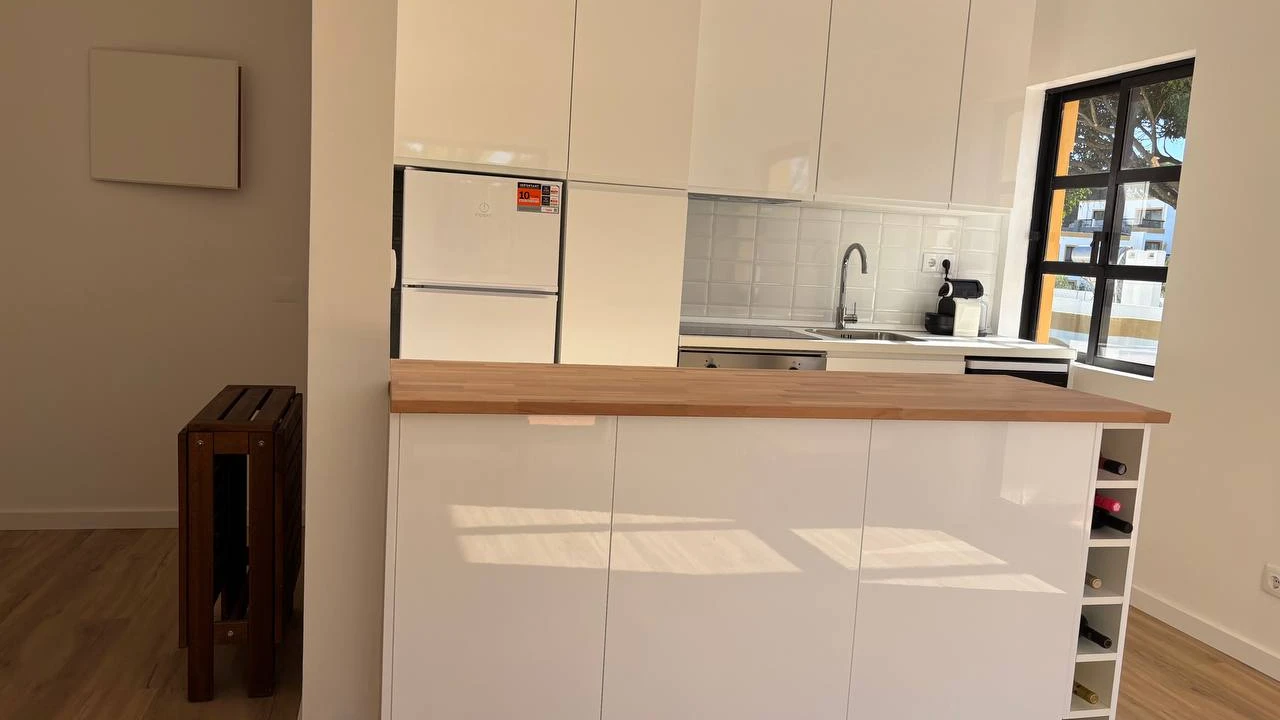
The accompanying Alfagar photograph shows an installed kitchen with white cabinets and a timber-toned peninsula. It provides context for thinking about bulky renovation deliveries; it is not a surveyed access route, a record of how these items arrived or evidence of a safe handling method.
The useful result of preparation is a delivery that has a defined destination and confirmed responsibilities, with unresolved access questions made visible before booking. To discuss your property and proposed works, contact Build It Now with the scope and the supplier information already available.