
A renovation can leave a well-finished space and a scattered record of how it became that way. Product references sit in messages, a drawing is attached to an old email, and photographs have filenames that mean nothing to the person who later needs a replacement part. The difficulty appears when a future question must be answered without reconstructing the whole project.
A final decision dossier can make that search more manageable. This is a proposed filing method, not a statement that every renovation includes the same documents or that a folder replaces professional inspections, contractual acceptance or legal requirements. Its purpose is narrower: help someone find the basis of a past choice and distinguish it from proposals that were never adopted.
Start with the question a future reader will ask
An archive organised only by the date files arrived is easy to fill and difficult to use. A future owner may need to know which finish was selected, where a component reference is recorded or why a proposed detail changed. Those questions point to subjects and locations, not necessarily to email dates.
Begin with a short index using familiar room and component names. Keep the naming consistent with the drawings available for the project. The index should direct the reader to a record; it should not claim to verify a hidden installation or certify that a particular product was used. Where information is missing, record the gap rather than replacing it with an assumption based on a photograph.
Separate the adopted choice from the alternatives
An early proposal and a later selection can both be useful records, but they should not look equally current. Give each decision a brief subject, the date recorded and a reference to the message, drawing or document supporting its status. Keep discarded alternatives in a separate history when they explain the choice, rather than mixing them with the active reference.
For example, a hypothetical finish change might have a sample photograph, a supplier reference and a written confirmation. Store the connection between those items. A photograph alone may show colour and appearance without identifying the exact product. If confirmation is absent, label the entry as unresolved instead of treating the most attractive image as evidence of the final specification.
Connect references without making the index a second archive
A useful index does not need to duplicate every document. It can point to the current file, its location and the subject it supports. Duplicate copies create another question later: which copy should be used? If there is a reason to keep an earlier issue, identify it as history and preserve its link to the later record.
Use filenames that remain understandable outside the original email thread. A room, subject and issue date may be enough when the folder structure already supplies the project context. Avoid including personal details that the next reader does not need. Before sharing a folder, review access and remove unrelated attachments rather than assuming that everything collected during the works belongs in the handover archive.
Keep photographs as context, with their limits visible
Photographs help a reader recognise a location, finish or visible detail. Their usefulness increases when each one has a short description and an identifiable subject. A wide view can establish context, while a closer view may help locate the feature mentioned in a drawing or note. Neither view automatically proves what lies behind a surface.
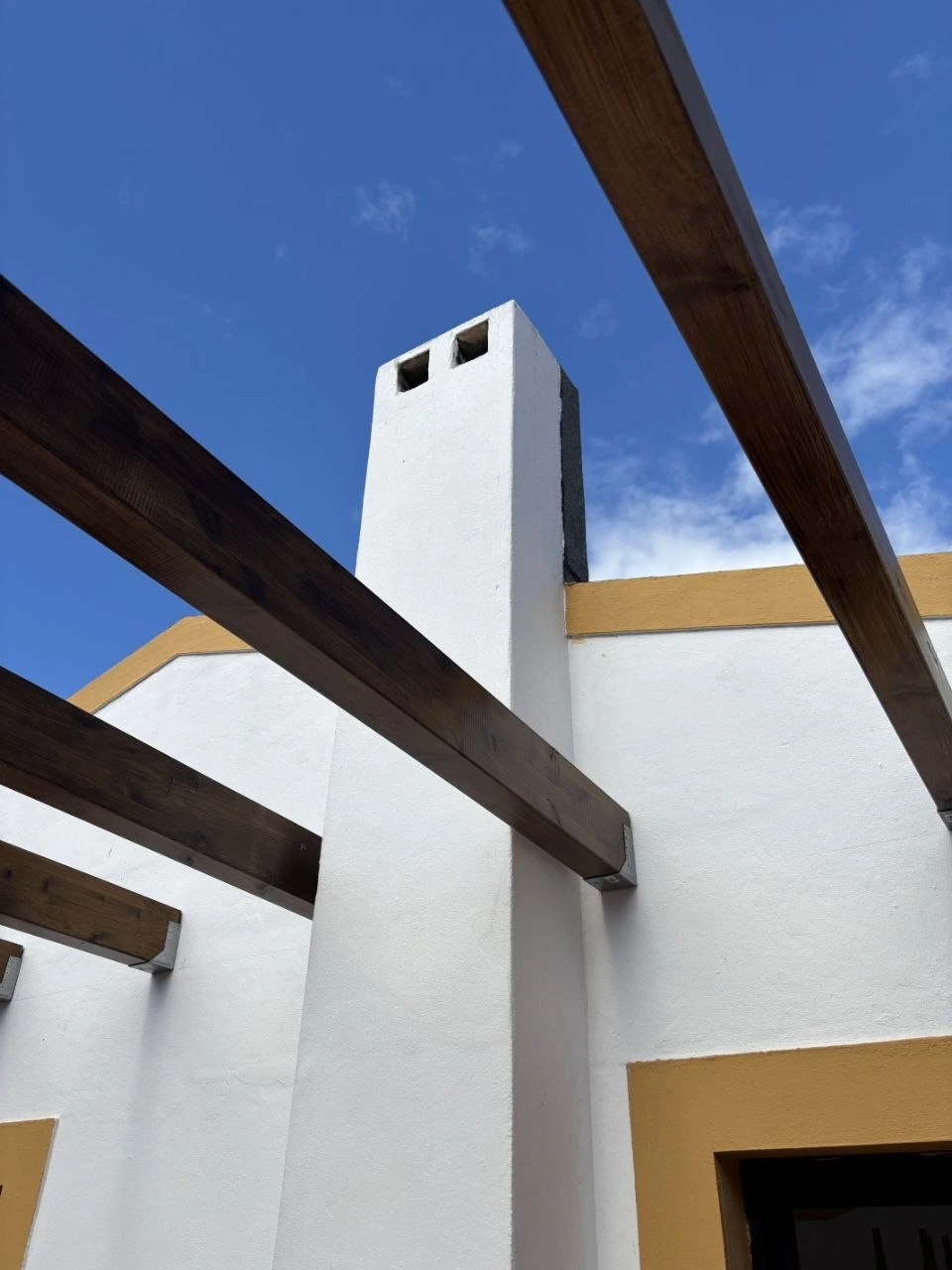
The cover photograph shows an exterior architectural detail from the Alfagar image collection: white walls, ochre trim and projecting dark timber beams. It provides visual context for organising renovation records. It does not show a completed dossier, confirm a technical specification or demonstrate the performance of any material or assembly.
Give open questions their own place
A decision archive should distinguish a missing reference from a defect observed on site. Those are different problems with different next steps. One entry might need a product document; another might need clarification from a qualified professional. Combining both under an unexplained label such as pending makes it harder for a future reader to know what action is appropriate.
For each open question, record what is missing, where the question arose and who should be contacted to clarify it. Do not imply that assigning a name establishes liability or guarantees an answer. The file is a way to preserve the question and its supporting material, not to replace the project participants’ responsibilities or the procedures applicable to the works.
Test retrieval before calling the archive useful
Ask someone unfamiliar with the folder to locate a specific adopted finish and the document that supports it. Then try a second question about an unresolved reference. If the person reaches several plausible files with no way to choose, improve the index and status labels before adding more material. The test is about finding information, not approving construction quality.
Keep a read-only copy of the assembled archive and a clearly identified place for later additions. That separation helps preserve what was available at the time without preventing the record from improving. For a renovation enquiry, Build It Now can discuss the project context with you; agree the scope and available documentation directly rather than assuming that this proposed filing method is a standard contractual deliverable.