
Shower screen handover: the five-minute walk before the first real shower
Published on 19 November 2026
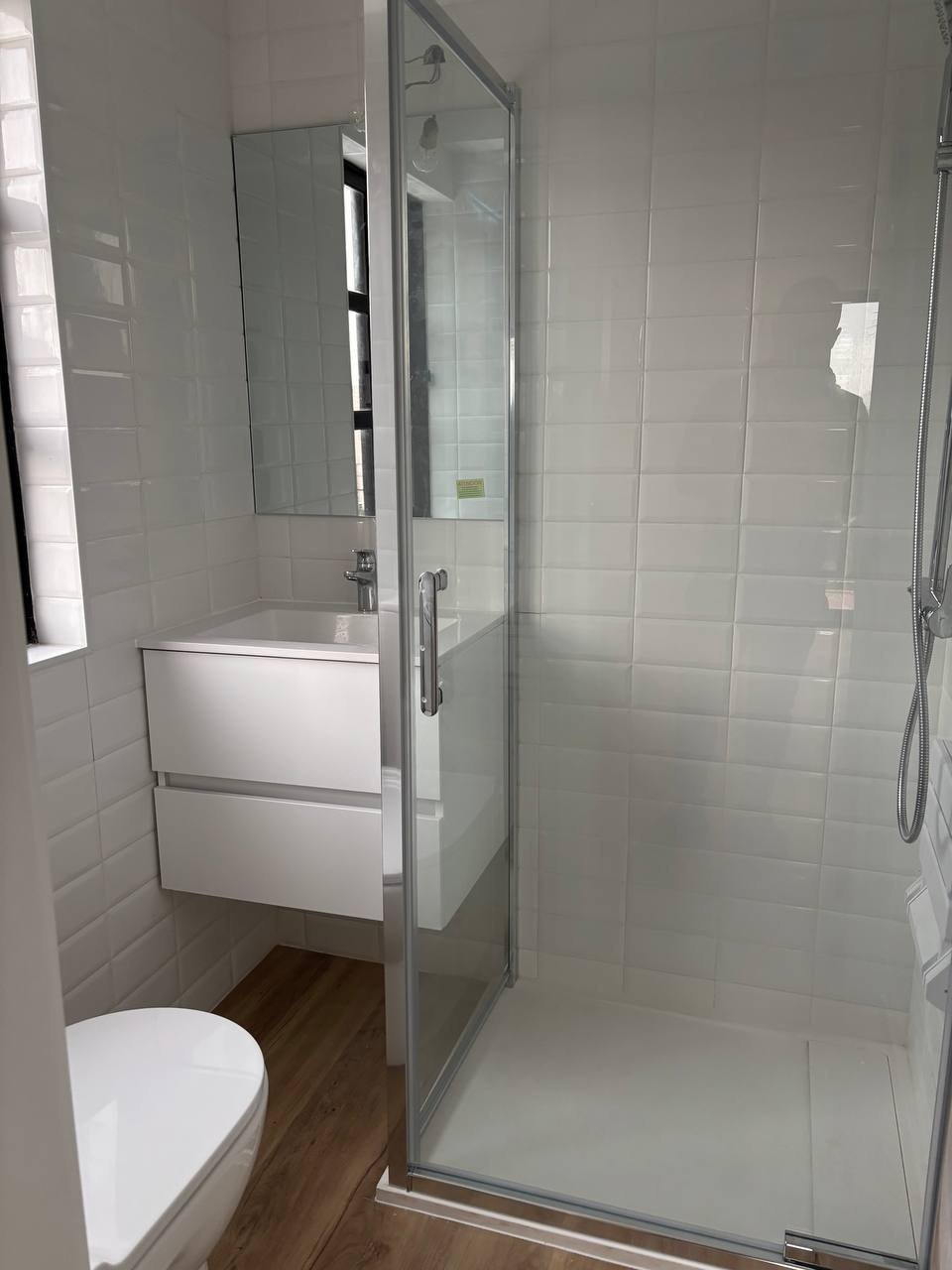
The bathroom is the last room to be finished and the first to be used wrong. Before the first real shower, the glass screen, the tray and the silicone joints deserve a short, deliberate walk — the kind that costs five minutes now and saves a long argument about warranty later.
Read the glass before you admire it
Every fixed panel and door should carry its manufacturer’s marking: toughened glass shows an etched or printed stamp, usually small and in a corner. Find it on each piece, not just one. Photograph the stamp together with the paperwork the installer hands over, which should state the glass make-up and thickness. If the screen arrived with a protective film or factory sticker, ask in front of the glass whether it must come off before first use or after the silicone has fully cured — removing it too early on a curing joint is how tiny leaks appear.
Then test the movement, slowly. A hinged door should close without its edge touching the tile or the tray; a sliding door should run its full width without a hard spot. Watch the gaps at the corners when the door is shut: a gap that lets water escape forwards is not a cosmetic detail, it is tomorrow’s wet floor outside the shower.
The tray and the two lines of silicone
Pour two buckets of water onto the tray — slowly, the way a rain shower would, not the way a pressure jet would — and stand back. The water should find the drain without standing pools, and there should be no trail escaping past the fixed panel into the bathroom floor. A shallow pool beside the drain means a fall that was drawn on paper but not laid in the room; it is fixable at handover and expensive after months of use.
Next, look at the two joints that decide the life of the installation: where the tray meets the wall tiles, and where the glass channel meets the tray and wall. They should be continuous, smooth and without pinholes. A bead applied with a dry finger leaves gaps that blacken within a season. If the silicone looks rushed, say so at the handover walk, not after the first mould.
Hardware, handles and what they promise
Towel rails that double as door handles take real force; check they are fixed into the framing or a solid substrate, not just into tile. Clips and hinges should have no play when you lift the door by its handle. If the specification listed a particular stainless grade for the coastal air, compare what is fitted with what was quoted — a downgrade is legitimate only when it is documented and accepted in writing.
Ask which cleaner the manufacturer excludes. Acidic bathroom products attack chrome and some channels; hard water in parts of the Algarve leaves scale fast, and the wrong routine makes a one-year-old screen look ten.
A second look after the first month
Silicone needs time, and habits form sooner. Around the fourth week, repeat two small things: press the corner seals again — a bead that stayed soft may now show a gap where the first showers found the low spot — and wipe the glass with the agreed routine rather than whatever the household reaches for. Residue builds where rinse spray dries, usually at the hinge side. Two minutes, done once, tells you whether the walk you made at handover is holding or whether one line of it belongs in the installer’s follow-up list.
One page, two photographs, one date
Finish the walk by writing one page: what you tested, what the glass stamps say, what still bothers you and by when it will be resolved. Photograph the seals and the drain while the water is still running, with the date in the metadata. The installer keeps a copy, you keep a copy.
This is not distrust; it is how both sides protect a good job. A shower screen that passes a five-minute walk today is a screen that keeps passing quietly for years — and the family gets to enjoy the first real shower without thinking about any of it.