
The seven checkpoints of a renovation: what each one protects
Published on 24 November 2026
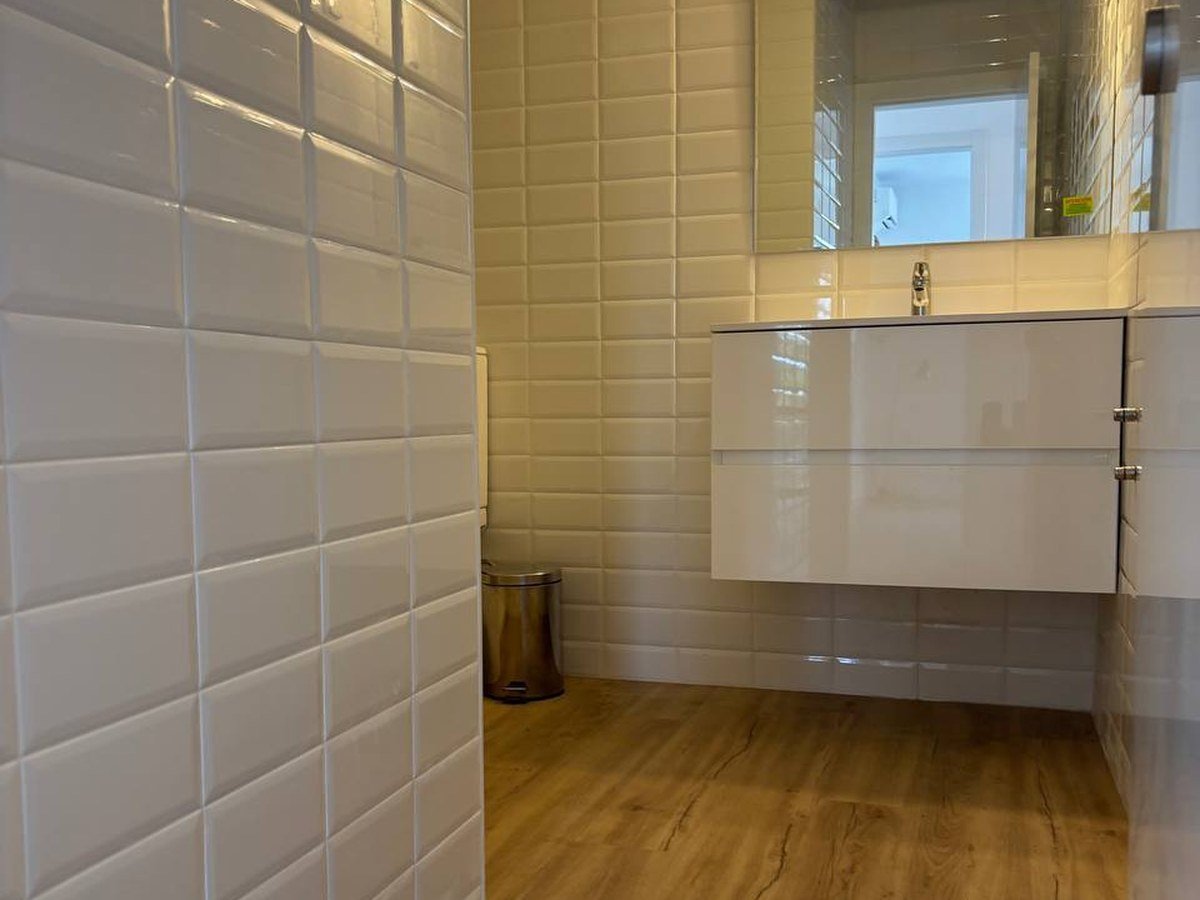
Most of what goes wrong in a renovation goes wrong at a moment you never see again: the pipe that is covered on Tuesday, the membrane that is tiled on Friday, the cable that disappears behind plasterboard. Once a surface is closed, the problem does not disappear — it becomes someone else’s demolition. The way to stop that is not more trust or more photographs in a WhatsApp group. It is a list of moments, fixed in advance, where the work cannot move on until a named technician has signed that what is now hidden is correct.
That is what a quality checkpoint is: not a meeting, not a status update, but a gate with an owner, a test and a signature.
The seven gates we use
Our protocol runs on seven mandatory checkpoints, and none of them advances without a technical conformity signature. The names matter less than the logic: each one protects something that will be impossible, or expensive, to verify later.
1. Project validation and initial setting-out
Before any physical intervention, the site is compared with the BIM and CAD drawings millimetre by millimetre: structural deviations, existing service connections, and the safety plan. Everything downstream inherits the accuracy of this step, which is why it happens before the first wall moves.
2. Concealed infrastructure and building services
The one people regret skipping. Water, drainage, heating, cooling and electrical runs are tested before ceilings, walls and slabs are closed: hydrostatic pressure and tightness with a zero-leak criterion, insulation, load balancing and earthing, and tightness on the air-conditioning and fluorinated-gas side. The electrician who signs is a certified professional; the plumbing lead signs his own systems.
3. Waterproofing and insulation
Before any tiling or finishing in wet areas, terraces and roofs: membrane continuity, thermal and acoustic bridges resolved rather than covered, and a flood test held for 24 to 48 hours before the screed and tiles go down.
4. Substrate, levelling and finishes
During screeds, microcement, natural stone and tiling: laser planimetry, adhesion, square and setting-out checks, and expansion joints where the material needs them. A floor that looks flat and a floor that is flat to a laser are two different things, and only one of them stays that way under furniture.
5. Joinery, furniture and technical integration
In the finishing phase: plumb and calibration of hardware, appliance integration, technical lighting and the junction between joinery and the electrical points.
6. Pre-handover snagging and final audit
Five to seven days before keys are handed over, our joint technical direction runs an internal protocol of more than 80 inspection points and produces the snag list. Doing it a week early is the difference between a punch list and a panic.
7. Formal handover with the client
The day itself: a signed reception record, the technical warranty dossier (we issue cover ranging from five to ten years depending on the element), as-built drawings and the manuals for what you will actually operate.
Why the signature is the part that protects you
A checkpoint without a name attached is just a photograph. The value is that somebody qualified to judge that installation wrote, on a date, that it was right, and that nothing moved forward until they did. When something is questioned later, that record separates a conversation about facts from one about memory.
Two habits make those records useful rather than decorative. Tests that leave a reading — pressure, tightness, the flood test — are logged with the value and the date, not just a tick. And the signer is the person responsible for that trade, so any failure has an owner and a fix route.
What to ask your own contractor
None of this requires you to be a builder. Three questions tell you whether a renovation is being gated or merely watched:
- Which stages cannot start until somebody signs, and who signs them?
- What gets tested before walls, ceilings and terraces are closed, and how will I see the result afterwards?
- What document will I hold at handover that says which standard was applied to what is now hidden?
If the answers are vague, what you are buying is a finish that looks good on the day. The morning a hidden installation fails, that surface comes open again at your cost, in your home.
We build for owners who are not on site every day, in the Algarve and internationally: the seven gates exist so that distance does not become risk. If you are comparing quotes and want to know what is actually being checked between the tiles and the closing date, talk to our team and we will show you a real checkpoint record from a completed project.