Unveiling Exclusivity: 5 Breathtaking Luxury Design in the Algarve Trends for 2025
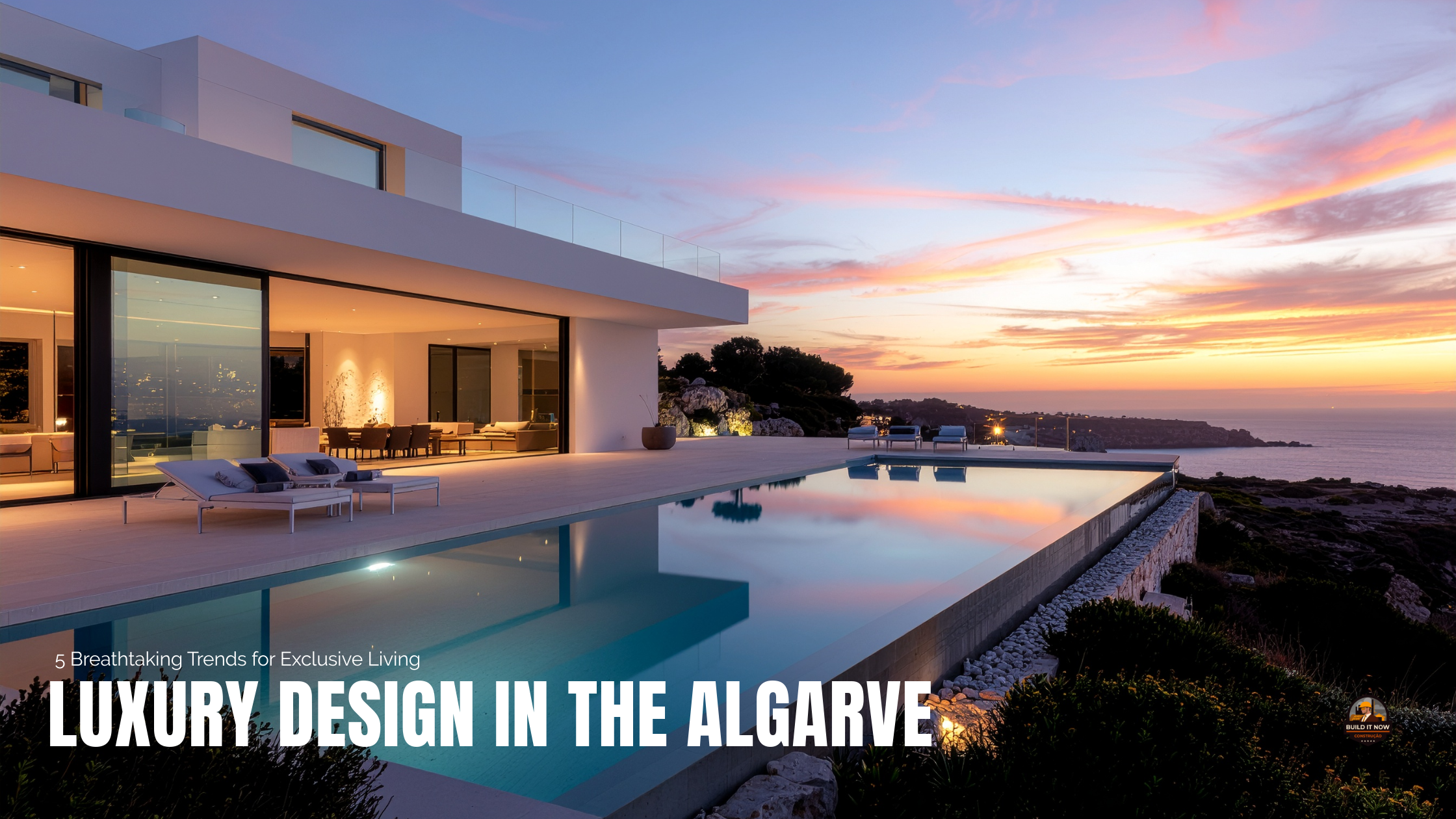
The Algarve, a jewel on Portugal’s southern coast, has long been synonymous with sun-drenched beaches, world-class golf, and, increasingly, exclusive luxury living. As discerning buyers from across the globe invest in this vibrant region, the demand for sophisticated, modern, and personalized homes has driven a breathtaking revolution in architectural and interior design.
If you are looking to invest, renovate, or simply dream about a stunning property in the Golden Triangle (Quinta do Lago, Vale do Lobo, Vilamoura) or beyond, understanding the cutting-edge aesthetic is key. The new era of opulence in Portugal’s premier resort region is defined by a seamless blend of natural authenticity, smart technology, and profound well-being.
Here are the 5 Breathtaking Luxury Design in the Algarve Trends shaping exclusive living in 2025:
The glorious Algarve climate, boasting over 300 days of sunshine a year, makes the integration of interior and exterior spaces a non-negotiable luxury. This trend, known as Biophilic Design, is about blending the home with the natural environment to enhance well-being and visual connection.
Expansive Glazing: Floor-to-ceiling sliding glass walls, often folding entirely away, are standard. They turn living rooms, master suites, and kitchens into one fluid space connected to terraces, infinity pools, and manicured gardens.
Courtyards and Atriums: Architects are incorporating sunlit internal courtyards and large atriums, bringing light and miniature landscapes right into the core of the house.
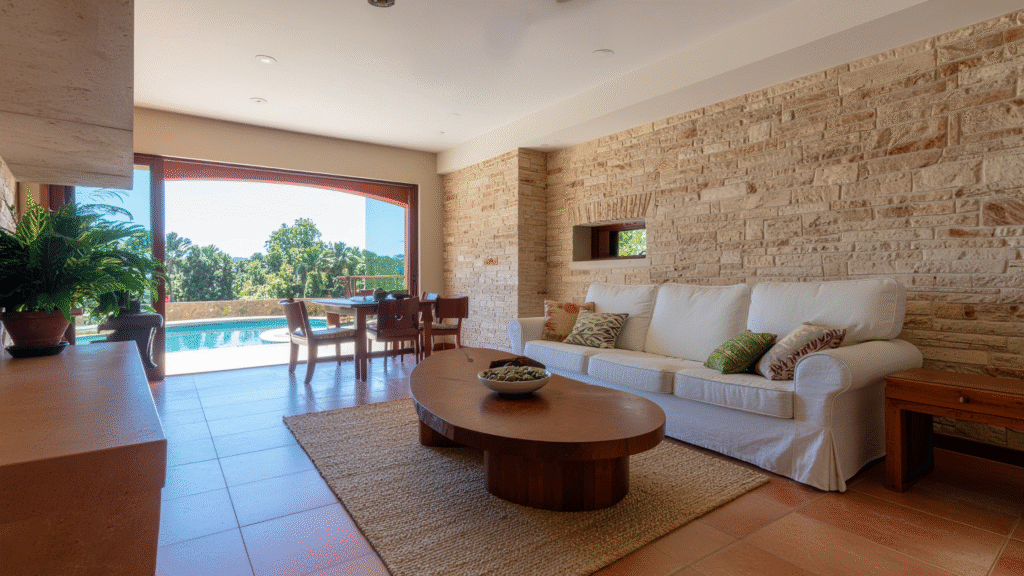
Cohesive Materials: The same natural stone (like local Moleanos or Lioz) or wood used indoors is extended onto the external terraces, physically blurring the line between inside and out.
This emphasis on flow ensures every moment spent in your exclusive residence maximizes the region’s natural beauty.
The sterile minimalism of the past has given way to a desire for warmth, tactility, and authenticity. Luxury buyers are increasingly demanding materials that tell a story and reflect a commitment to sustainability.
The new palette is inspired by the Portuguese landscape itself: rich terracotta reds, soft sand tones, deep olive greens, and warm ochre. These colours create a grounded, tranquil atmosphere.
Portuguese Cork and Stone: Locally sourced, sustainable materials are highly prized. Cork is moving beyond flooring to become a feature for wall coverings and unique furnishings. Local stones are valued for their low-emission profile and timeless elegance.
Hyper-Texturality: Forget smooth, uniform finishes. The trend is towards layered textures—think linen sheers, sisal rugs, rough-hewn ceramics, and high-contrast, overstated veining in marble and wood. This focus on texture transforms a house into a multi-sensory home.
In 2025, wellness is no longer a bolt-on amenity; it is built into the architecture. The exclusive buyer in the Algarve sees their home as a sanctuary—a place designed to promote physical and mental health.
Dedicated Wellness Spaces: High-end villas now frequently include bespoke features such as dedicated meditation rooms, state-of-the-art home gyms, saunas, and even Himalayan salt walls.
Natural Light and Airflow: Design prioritizes natural light exposure and cross-ventilation. This focus on clean air and light is essential for regulating circadian rhythms and creating a truly therapeutic environment.
Eco-Friendly and Sustainable Living: Sustainability is an expectation. Energy-efficient home designs, solar panels for reduced running costs, and rainwater harvesting systems are becoming standard features, aligning luxury with environmental responsibility. This focus on a ‘net-zero’ approach is paramount.
The geometric, rigid shapes that defined modernism are softening. A key trend in Luxury Design in the Algarve is the move toward gentle, organic shapes that encourage calm and fluidity.
Arched Architecture: Arched doorways and windows are making a powerful return, adding a touch of classic, Moorish-inspired elegance while feeling utterly modern.
Sculptural Furnishings: Expect to see curved kitchen islands, rounded sofas, and sculptural lighting fixtures. These soft lines create a more inviting and visually restful environment, moving away from sharp, angular interiors.
Bespoke Carpentry: Custom-built storage solutions are a perfect example of this. Integrated cabinetry that follows a room’s soft contours, designed as a piece of art rather than a simple closet, is a hallmark of truly exclusive luxury living.
While technology is expected in a luxury property, the 2025 trend is for it to be invisible. Buyers want convenience without clutter—a home that anticipates needs rather than requiring constant input.
The most advanced villas are moving towards AI Luxury (Artificial Intelligence) integration, where the home’s systems (lighting, climate control, security, irrigation) are managed through discreet voice controls or elegant, minimal app interfaces.
Predictive Climate Control: Systems that monitor weather patterns and adjust the villa’s temperature and humidity before a shift is felt, ensuring constant, perfect comfort.
Hidden Technology: Sensors and control panels are artfully concealed or integrated into the architecture. This ensures the aesthetic remains focused on high-quality materials and design, not on gadgets.
Energy Harmony: Smart systems now balance the use of solar input with consumption for optimal efficiency, often making the homes self-sustaining and cutting down on utility costs dramatically.
The trends defining Luxury Design in the Algarve in 2025—from seamless indoor-outdoor living to sophisticated, integrated technology—demonstrate a clear shift. The new definition of opulence is about creating spaces that are not just beautiful, but profoundly functional, sustainable, and deeply authentic. This commitment to values and the unique local heritage is what makes the Algarve’s property market one of the world’s most desirable locations for high-net-worth individuals.
This focus on an authentic, health-conscious, and technologically advanced lifestyle ensures that an investment here is an investment in both enduring value and a truly exceptional quality of life. For further reading on the Algarve’s commitment to green construction, you can explore resources from the European Commission on Energy Efficient Buildings Initiative (DoFollow Link).
The Real Cost of Cutting Corners: Why Mediocre Finishes Will Ruin Your Project
In the construction world, there’s often pressure to reduce costs, leading some to compromise on the materials and craftsmanship used for the final touches. However, this is a dangerous gamble. The risk of mediocre finishes is far more severe than the immediate savings they promise. These final layers—from paint and tiling to carpentry and fittings—are what your client sees, touches, and lives with every day. When they fail, the entire project’s reputation fails with them.
5 Ways Mediocre Finishes Compromise Construction Quality
Choosing low-quality materials or rushing the installation process can seem like a shortcut, but it invariably leads to long-term problems. Here are five critical ways mediocre finishes negatively impact a project.
Accelerated Degradation and Short Lifespan
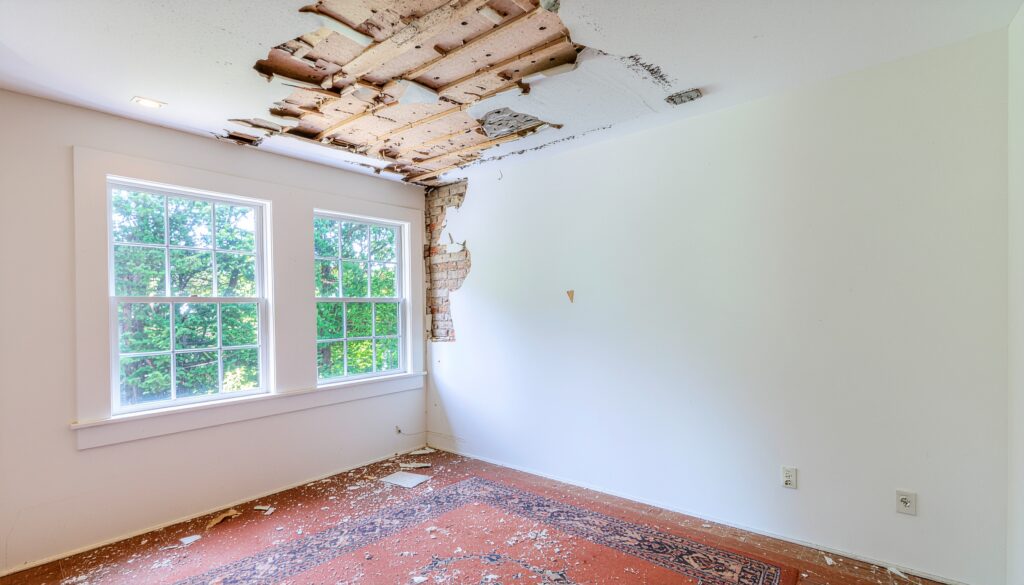
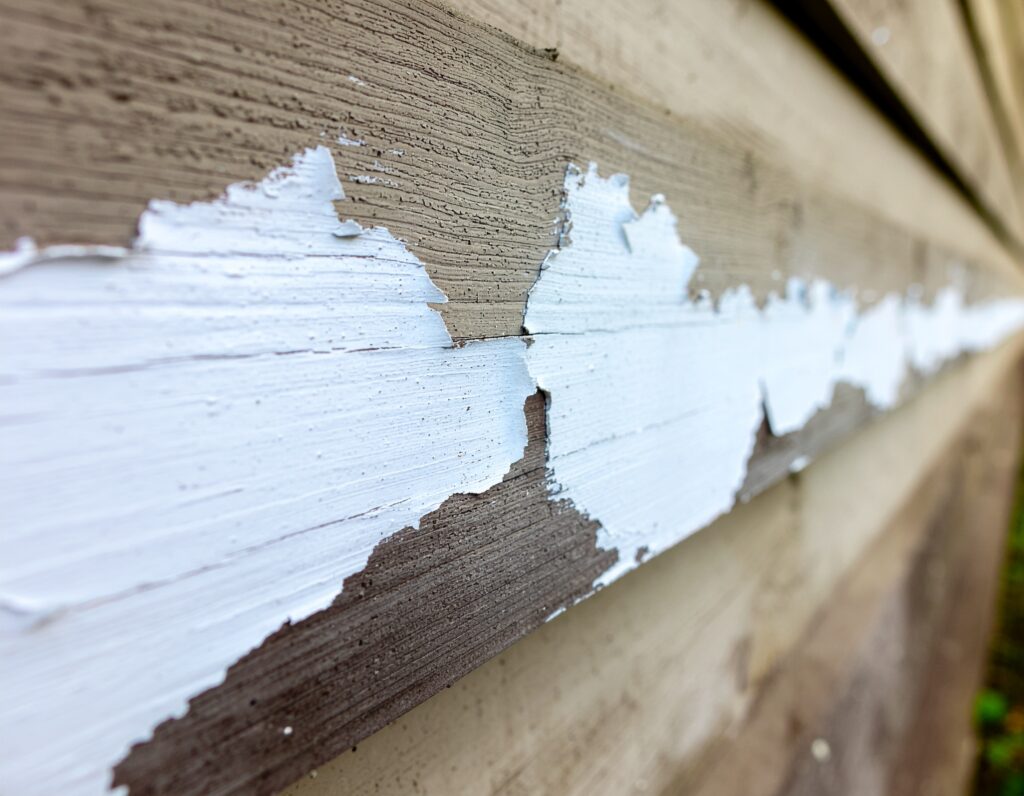
Poor quality materials, whether cheap paint, sub-par flooring, or weak sealants, simply do not last. They are not designed to withstand standard wear and tear, moisture, or UV exposure. This leads to issues like premature fading, cracking, peeling, and chipping. The seemingly lower initial cost is quickly erased by the need for costly and frequent repairs and replacements.
Compromised Structural Integrity
While finishes are generally considered aesthetic, in many cases, they protect the underlying structure. Poor exterior finishing work, such as incorrect window sealing or inadequate stucco application, allows moisture intrusion. Over time, this can lead to severe issues like mold, wood rot, and deterioration of structural elements, creating a silent, hidden crisis.
Destruction of Property Value and Aesthetics
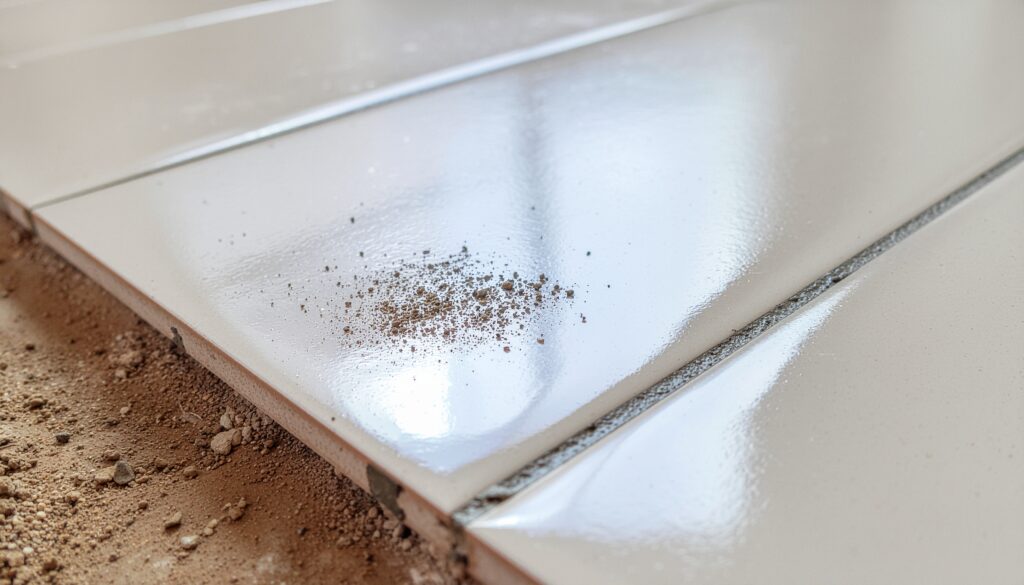
The aesthetic appeal of a property is heavily determined by its finishes. High-quality finishes contribute significantly to a home’s market value. Conversely, obvious flaws stemming from mediocre finishes—uneven grout lines, bubbling paint, or misaligned cabinetry—immediately signal poor overall quality to potential buyers and devalue the property.
Excessive Liability and Callbacks
For a construction company, the true risk of using mediocre finishes lies in the inevitable callbacks. A dissatisfied client experiencing issues with peeling grout or faulty fixtures will call you, not the supplier. These warranty repairs consume time, labor, and resources, severely eroding any profit margin gained by cutting corners. See more: Key metrics to determine the warranty budget and accruals
Reputational Damage That Lasts
In the age of online reviews, a single project compromised by mediocre finishes can inflict lasting damage on your company’s reputation. Trust is the foundation of the construction business. Delivering a product that fails to meet expectations undermines that trust, leading to negative reviews and a significant loss of future referral business.
The Solution: Prioritizing Quality Finishing Work
Avoiding the pitfalls of low quality begins with a commitment to superior finishing work and clear communication with your clients. This includes:
Vetting Suppliers: Insist on materials from reputable, established suppliers.
Skilled Labor: Ensure that specialized finishing work is executed by experienced tradespeople.
Quality Assurance: Implement strict multi-stage inspections before, during, and after finish installation.
A successful project is not just about meeting deadlines; it’s about delivering enduring quality. By prioritizing superior finishes, you secure the long-term value and integrity of the structure and build lasting trust with your clients. See more: Construction Materials Affect Property Value
Secure Your Project’s Future: Demand Excellence
Don’t let the temptation of short-term savings jeopardize your reputation and your client’s investment. When you choose our construction firm, you choose a commitment to excellence, ensuring that the finished product reflects the highest standards of durability and beauty.
Contact us today to discuss how we secure every detail of your next project, from foundation to the finest finishing touch.
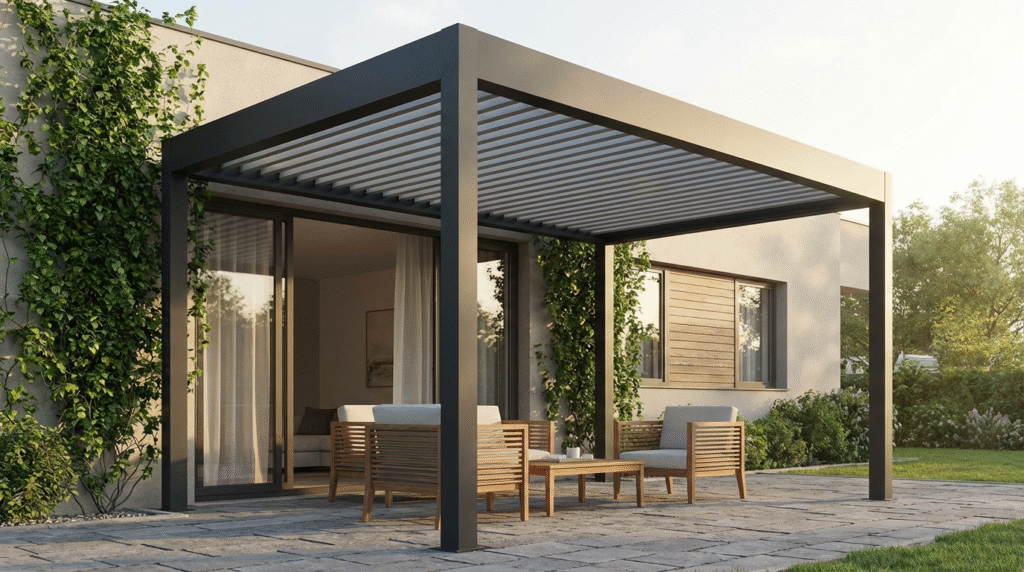
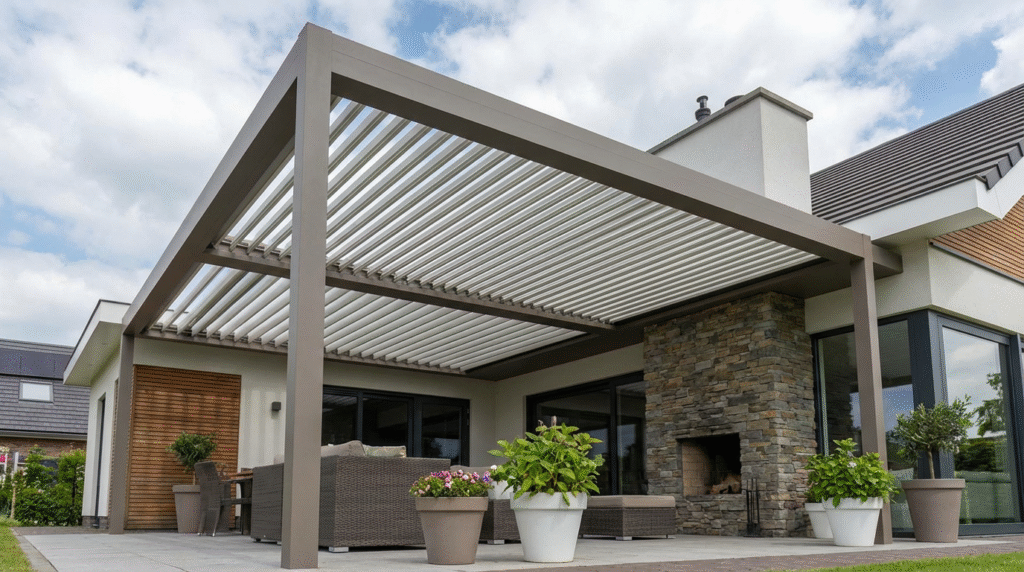
Bioclimatic Pergolas: The Ultimate Upgrade for Your Outdoor Living Space!
5 Reasons Why Bioclimatic Pergolas Are the Future of Outdoor Comfort
Why are more and more people choosing Bioclimatic Pergolas? They are not just simple covers; they are intelligent systems designed to adapt to environmental conditions. Let’s dive into the top five reasons why these pergolas are a game-changer for any construction project.
1. Unmatched Year-Round Climate Control
Unlike static structures, bioclimatic pergolas feature adjustable louvered roofs. These motorized aluminum slats can be rotated 180 degrees via a remote control or a smart home system. This allows you to:
Regulate Sunlight: Tilt the louvers to block direct sun in the summer.
Control Ventilation: Open the louvers partially to create natural airflow, reducing the ambient temperature underneath.
Provide Rain Protection: Close the louvers completely to form a waterproof roof, complete with an integrated drainage system.
2. Superior Energy Efficiency
A properly installed bioclimatic pergola can significantly reduce your home’s cooling costs. By strategically positioning the louvered roof, you can shade the adjacent interior spaces, preventing solar heat gain inside your house. This passive climate control is a key feature that appeals to environmentally conscious homeowners.
3. Sleek, Customizable Modern Design
The clean lines and durable aluminum construction of bioclimatic pergolas offer a highly contemporary aesthetic. They can be customized with various features, including:
Integrated LED lighting systems.
Glass sliding doors or retractable side screens for full enclosure.
Heating elements for cooler evenings.
4. Durability and Minimal Maintenance
Constructed typically from high-grade, corrosion-resistant aluminum, these structures are built to withstand harsh weather conditions, from heavy snow loads to strong winds. Their durable finish requires minimal maintenance, usually just a simple wash, allowing you to enjoy your outdoor space without the upkeep burden associated with wood or fabric alternatives.
5. Increased Property Value
Adding a sophisticated, functional, and stylish outdoor living space like a bioclimatic pergola is a significant investment that instantly boosts your property’s appeal and resale value. It transforms a simple patio into a luxury outdoor room.
The Science Behind Bioclimatic Design
The term “bioclimatic” refers to architecture that is designed to adapt to the local climate, minimizing energy use and maximizing comfort. In the context of bioclimatic pergolas, this means using the sun’s energy, natural shade, and airflow to maintain a perfect environment without relying on artificial heating or cooling. It’s an elegant marriage of form and function. See more: Bioclimatic building principles
Ready to Transform Your Outdoor Space?
Our company specializes in the design and installation of custom bioclimatic pergolas. We use only the highest quality materials and provide expert craftsmanship to ensure your new outdoor living space meets your exact needs and specifications.
Contact us today to schedule a consultation and take the first step toward enjoying your patio or terrace all year long!
The Silent Killer of Remote Trust: The 7 Ultimate Secrets to Guarantee Your Luxury Remote Remodel Success
Table of Contents
Ready to Conquer the Silent Killer of Remote Trust?
The Ultimate Secret Threatening Your Investment
What is the Silent Killer of Remote Trust? The Hidden Cost of Silence
The 7 Ultimate Secrets to Eliminate Remote Distrust
Radical Transparency: The Build It Now Solution
The Ultimate Secret Threatening Your Investment
If you own a luxury villa overseas, such as in the Algarve, and manage a remodel from a distance (UK, US, or anywhere abroad), you know the challenges are significant. You worry about deadlines, budgets, and the quality of the craftsmanship.
However, there is a far more insidious threat—an invisible force that undermines your peace of mind and risks your investment: the Silent Killer of Remote Trust. (Focus Keyword in the first 10% of the content)
This is not a construction problem. It’s not the weather, nor the bureaucracy. It is the lack of visibility and poor communication that turns the excitement of your project into a constant source of stress and doubt.
What is the Silent Killer of Remote Trust? The Hidden Cost of Silence
The Silent Killer of Remote Trust is the information gap that opens up when an international client fails to receive clear, constant, and verifiable updates on their project.
This “silent killer” manifests in anxious questions that haunt you:
“Are they actually working on my property today?”
“Was the new plumbing installed correctly?”
“Why hasn’t my project manager responded in 48 hours?”
“Did the team understand the architect’s design?”
The true cost of silence is not the mistake itself, but the fear and uncertainty that silence generates. This distrust can lead you to make rushed decisions or unnecessarily pressure your team, damaging the relationship and workflow.
The 7 Ultimate Secrets to Eliminate Remote Distrust
To defeat the Silent Killer of Remote Trust and bulletproof your luxury remodeling project, you must demand a proactive and structured transparency system. Here are the 7 Ultimate Secrets that make the difference in managing luxury projects remotely:
Verifiable Daily Site Reports: Not just text, but a short video and a tagged photo album demonstrating the exact daily progress and work area.
Centralized Client Dashboard: A digital portal (like the one offered by Build It Now) where you can review the schedule, budget, and documents in real-time, 24/7.
Verification-Based Payment Milestones: Payments are only released when pre-inspected and documented work milestones are met.
Immediate Decision Alerts: A system for notifying material or design decisions the moment they are needed, without communication delays.
Scheduled Weekly Calls with Agendas: A recurring meeting with clear objectives to review weekly progress and plan the next 7 days, always with meeting minutes.
Clear communication is essential for project success. A recent study by the Project Management Institute reveals that communication failures are the primary cause of 56% of complex project failures.
Radical Transparency: The Build It Now Solution
At Build It Now, we know that trust is earned not through promises, but through proof. Our operating model is specifically designed to eliminate the Silent Killer of Remote Trust.
We replace uncertainty with clarity: every nail, every layer of paint, every marble decision is documented and accessible to you, wherever you are.
✅ Constant Visibility: On-demand site cameras and regular virtual tours.
✅ Total Accountability: Every team member has assigned tasks and updates in your portal.
✅ Luxury Peace of Mind: You focus on the design; we focus on flawless execution, with zero stress over distance.
Ready to Conquer the Silent Killer of Remote Trust?
Your luxury remodeling project deserves flawless execution and complete control, regardless of the distance. Don’t let silent communication kill your trust.
Is Your Facade Paint Not Resisting Salt Efflorescence?
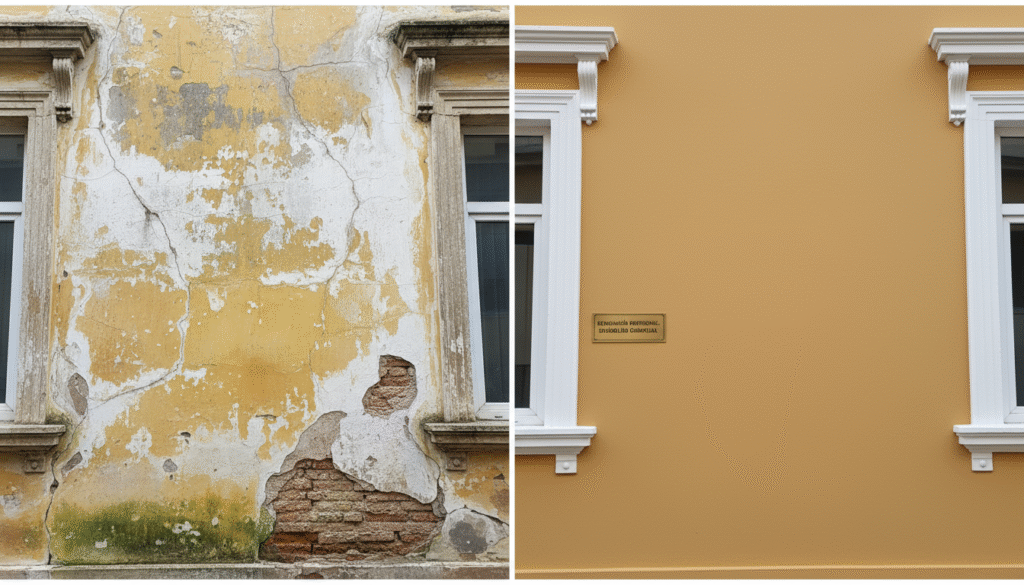
If you’re reading this, you’ve probably noticed white stains, peeling paint, or efflorescence on your building’s facade — clear signs of a problem that goes beyond a simple repaint. In this article, I will explain why your facade paint doesn’t resist salt efflorescence, and what it really takes to solve the problem at its root. As a specialist in facade remodeling with BuilditNow, I want you to be well-informed to ensure quality, durability, and a strong impression of commitment to excellence.
What is “salt efflorescence” and why it damages paint
The phenomenon we call “salt efflorescence” is actually the appearance of mineral salts (mainly nitrates, potassium, sodium) that rise or migrate through masonry or plaster. The typical process is: moisture enters or rises through the wall → carries salts → salts reach the surface and crystallize or form efflorescence → plaster or paint loses adhesion → stains, peeling, or bubbles appear. (tintasepintura.pt)
Key points to understand:
Rising or capillary damp: water coming from the ground through the building materials is a common cause. (murprotec.pt)
Lateral leaks or poor drainage near the base of the wall also favor the problem. (tintasepintura.pt)
Porous walls, inadequate plaster, or lack of waterproofing make the system more vulnerable. (forumdacasa.com)
Paint fails not necessarily because of poor quality but often because the wall itself is compromised, and moisture/salts push or dissolve the paint.
Ignoring the source of moisture and salts makes repainting only a temporary fix — the problem will return.
Is Your Facade Paint Failing Due to Salt Efflorescence? Common Mistakes:
When a client asks me, “Why is my paint peeling all of a sudden?” we usually find some recurring errors:
1. Painting without treating moisture or salt
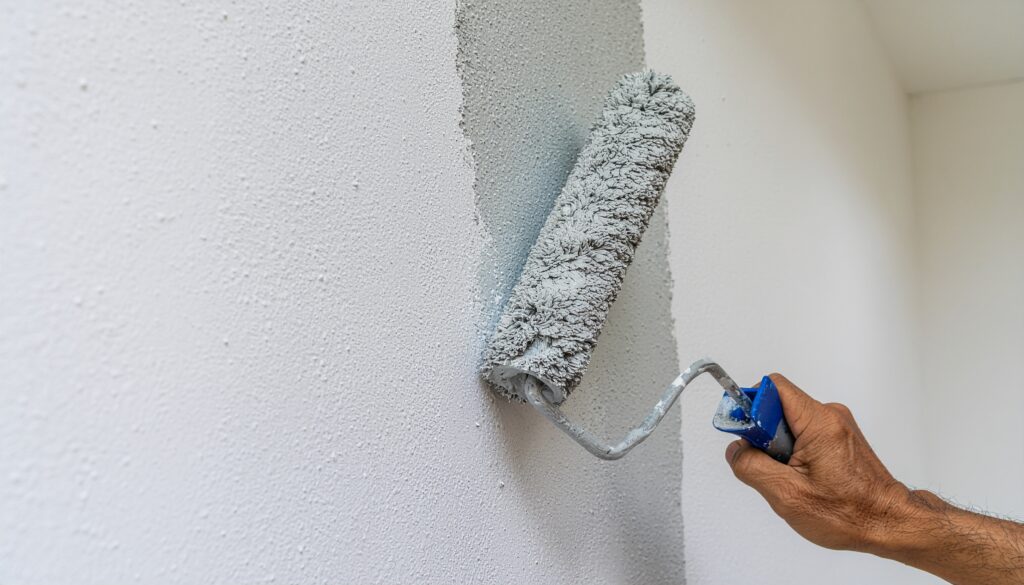
Applying new paint without removing or treating moisture or salts in the masonry is like putting a band-aid on a broken bone. The salts keep migrating to the surface and force the paint to detach. (barbot.pt)
2. Lack of proper barrier or base insulation
If the base of the wall near the ground or foundation isn’t waterproofed, or water accumulates near the wall, moisture easily enters. (tintasepintura.pt)
3. Using standard paints instead of systems for moisture-affected walls
There are specific “anti-salt” primers and paints for walls with rising damp. Using a standard paint without considering wall pathology drastically reduces durability. (barbot.pt)
4. Weak or poorly prepared wall support
Loose plaster, cracks, or old drainage — if the support fails, the paint above it will fail too. (tintasepintura.pt)
5. Poor ventilation or exposure
Walls with little ventilation or that trap moisture (for example, due to new window installations) increase salt efflorescence risk. (murprotec.pt)
How to ensure your facade paint lasts
To make facade paint resist salt efflorescence and wear, the procedure must follow a structured path. Here are the steps BuilditNow follows and I recommend to all clients:
Step 1: Diagnosis and identification of moisture source
Check for rising or lateral damp.
Inspect external drainage and water accumulation near the wall.
Examine plaster condition for visible salts, blisters, or efflorescence. (murprotec.pt)
Measure residual moisture and visually confirm efflorescence signs. (tintasepintura.pt)
Step 2: Treatment or elimination of moisture and salts
Rising damp: install a horizontal waterproof barrier or inject special resins (e.g., Sika Mur InjectoCream‑100). (prt.sika.com)
Repair cracks, leaks, or seal failures promptly to prevent recurrence.
Why investing in proper facade treatment makes sense
As the owner of BuilditNow, I want to emphasize that this investment is not just “doing it right” — it creates value, reliability, and a reputation for quality. Benefits include:
Longer-lasting paint and facade, reducing future interventions and maintenance costs.
Enhanced aesthetics and perceived quality — crucial for clients from the UK or USA expecting premium finishes.
Protects the building from more severe issues (mold, structural leaks) that could lead to complaints or reputation loss.
Allows you to advertise a “durable, salt-resistant facade” system in your marketing, reinforcing commitment to quality.
FAQ – Quick Answers
Q: Does “anti-salt” paint solve everything?
A: No. If moisture/salt sources aren’t addressed, “anti-salt” paint is only a temporary fix. The full system (waterproofing, base treatment, primer, paint) is what makes the difference.
Q: Can I just paint over a salt-affected wall and see if it works?
A: High risk of rapid failure. Salt acts from underneath and will compromise the new finish. Treat first, then paint.
Q: How long does a properly treated facade paint last?
A: Depends on exposure, material quality, and maintenance. If the support and moisture are controlled, life expectancy can be 10–15 years or more.
Q: In large hotel remodels, where do I start?
A: Conduct a preliminary moisture/salt diagnosis, map affected areas, plan treatment + painting schedule, and budget for the complete system. This shows professionalism and avoids surprises.
Conclusion
If your facade paint isn’t resisting salt efflorescence, the common mistake is focusing only on the finish while ignoring the root cause: moisture, salts, and compromised wall support. With BuilditNow, you have a partner who understands that quality and durability are more than a promise — they’re a practice. By treating the support correctly, preparing the wall, and using the right painting system, your facade will be protected and look top-notch. Schedule a free inspection and renovation consultation with our expert team.
To provide the best experiences, we use technologies like cookies to store and/or access device information. Consenting to these technologies will allow us to process data such as browsing behaviour or unique IDs on this site. Not consenting or withdrawing consent, may adversely affect certain features and functions.
Functional
Always active
The technical storage or access is strictly necessary for the legitimate purpose of enabling the use of a specific service explicitly requested by the subscriber or user, or for the sole purpose of carrying out the transmission of a communication over an electronic communications network.
Preferences
The technical storage or access is necessary for the legitimate purpose of storing preferences that are not requested by the subscriber or user.
Statistics
The technical storage or access that is used exclusively for statistical purposes.The technical storage or access that is used exclusively for anonymous statistical purposes. Without a subpoena, voluntary compliance on the part of your Internet Service Provider, or additional records from a third party, information stored or retrieved for this purpose alone cannot usually be used to identify you.
Marketing
The technical storage or access is required to create user profiles to send advertising, or to track the user on a website or across several websites for similar marketing purposes.