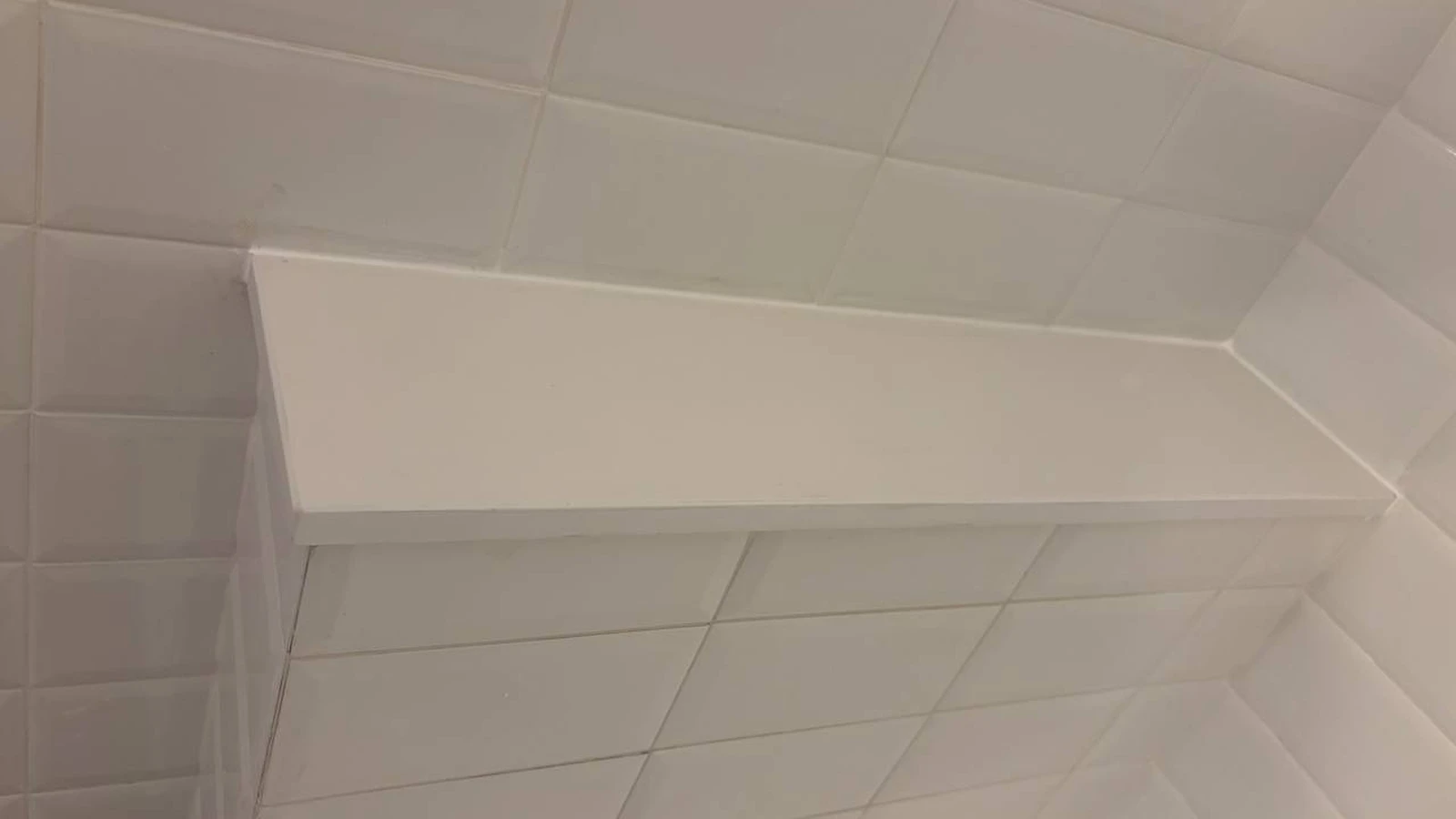
Alfagar detail, shown as context for identifying a renovation question; not evidence of technical performance or an agreed decision.
“Could we use a different shelf?” sounds like a simple renovation question. Read quickly in a message thread, it can also look like a request to change the work. The owner may only be exploring an option while someone else thinks a decision has been made. Written questions help when they make that distinction explicit, not merely when they preserve a conversation.
This guide focuses on the boundary between asking, expressing a preference and giving an instruction. It does not establish contractual approval rules: those depend on the project agreement and the people authorised to make decisions. Its purpose is to help an owner write a question that another person is less likely to mistake for a settled choice.
Say whether you are exploring or deciding
Start by naming the purpose of the message. “I am asking about an option; I am not requesting a change yet” communicates something different from “Please record this as my selection, subject to the agreed approval process.” The wording should reflect what you actually intend. A conversational question mark does not always make that intention clear.
Consider the sentence “Would a deeper shelf work here?” It might concern appearance, suitability or whether a revision is possible at all. State which point you want explained before asking anyone to act. This is an illustrative example, not advice about shelf dimensions or evidence that a particular project required a change.
Identify the detail without claiming what a photo proves
A photograph can locate the subject of a question. Include the room and the visible element so that the recipient does not have to infer them from a close-up. If you have marked an image, explain what the mark identifies. A circle around an area is not a drawing specification or a complete instruction.
The photograph here shows a white shelf or projection against white tiled walls at Alfagar. It is used as context for identifying a visible detail, not as evidence that a question was raised or resolved on that project. It does not demonstrate waterproofing, hidden construction or technical performance. Those matters require appropriate information beyond the photograph.
Distinguish a preference from a request to proceed
An owner can prefer an alternative while still needing to understand its implications. Write the preference separately from the unresolved questions. “I prefer the appearance of option B, but I need clarification before deciding” is more informative than a short message saying “B looks good”. The second version leaves the status open to interpretation.
Do not assume that a favourable comment authorises ordering, installation or a revised scope. Refer to the process agreed for the project and ask the appropriate person to explain what a formal decision would require. This organisational distinction does not determine the legal effect of a message; if that effect is uncertain, obtain suitable advice rather than relying on a template sentence.
Ask what an answer actually confirms
A reply may answer only one part of a question. “It is available” concerns availability, not necessarily suitability. “We can discuss it” is not agreement to change the work. If the answer is narrower than the question, ask about the remaining uncertainty instead of treating the whole subject as settled.
Build It Now works on renovation projects in the Algarve. When discussing a possible revision, ask how exploratory questions should be distinguished from confirmed decisions for that project. The method described here is a proposed communication practice, not a claim that every Build It Now agreement contains a particular approval system or that every message has the same contractual effect.
Correct an ambiguous message explicitly
If you notice that a question may have been read as an instruction, clarify it promptly with the people concerned. Refer to the actual message and explain your intended meaning. Do not silently edit an earlier exchange and assume everyone will see the change. Someone may already have read or forwarded the original wording.
Ask whether any action has followed and what needs to be checked next. Avoid promising that a clarification reverses an order, removes a cost or changes an obligation. The practical and contractual consequences need to be assessed through the agreed arrangements. Your immediate aim is to make the misunderstanding visible rather than to declare it harmless.
Finish with the status, not just a friendly reply
At the end of the exchange, write what remains undecided. The status might be “option being explored”, “awaiting an explanation” or “decision to be recorded through the agreed process”. Use wording the relevant people understand. A thumbs-up or “thanks” can acknowledge receipt without making clear whether a choice has been made.
Clear questions do not replace professional judgement or project agreements. They make the owner’s intent easier to understand before a discussion becomes an assumed instruction. To discuss an Algarve renovation with Build It Now, describe the property and intended scope, and separate the ideas you are exploring from decisions you have already made.
Alfagar interior; contextual photograph of visible finishes, not evidence of an inspection, test or contractual acceptance.
The last visit before receiving the keys can become a confusing conversation. A door needs an adjustment, a finish looks different from the sample, and someone suggests an extra socket. Those observations do not belong in the same category. A room-by-room walkthrough helps the owner describe what remains to be checked without turning every comment into a defect or an agreed instruction.
This is an organisational visit, not a contractual acceptance, an authorisation to occupy the property or a substitute for technical testing. The useful result is a clear, shared list. It records what was observed, where it was observed and what needs clarification before the wider handover discussion.
Agree what is ready to be checked
“Almost finished” is not a useful description of a room. Before arranging the visit, ask which elements are installed and available for inspection. A room might have finished walls and flooring while a door adjustment remains outstanding. Another might still contain protected surfaces that should not be uncovered for a casual visit.
Limit observations to what can actually be seen or operated safely. Do not assess an absent fitting as though it were installed, and do not force equipment that has not been released for use. Where a system requires a qualified person or a specific test, the owner can ask for the relevant explanation or record; opening a cupboard during a walkthrough does not replace that procedure.
Separate an observation from a change of preference
Use three headings in the visit notes: something to check against the agreed specification, a question about the original scope, and a new preference. This avoids treating a new request as if it were an old omission. It also prevents a visible concern from being dismissed merely because the original discussion is difficult to find.
For example, a handle that does not match the recorded selection raises a specification question. A request to change an agreed handle because another design now looks better is a new preference. Neither observation should be resolved from memory alone. Point to the current selection or agreed scope, then record the response in the same place as the question.
Follow a repeatable route through each room
Begin at the doorway and move around the room in a consistent direction. Note the location of each observation rather than writing “the wall” or “that corner”. A photograph can help identify the point, but it should accompany a short description. A close-up with no room name can be surprisingly hard to place later.
Look at finishes under suitable lighting, including normal daylight where it matters. Different lighting changes the appearance of surfaces; it does not, by itself, establish whether work meets a technical criterion. Record the concern and ask how it should be assessed. Avoid turning a particular viewing angle into a universal test.
At Build It Now, the conversation can begin with the rooms and interfaces within the proposed renovation scope. Ask which checks belong to the owner’s walkthrough and which require the project’s technical team. A shared route through the property is a way to organise those questions, not a claim that every installation has already been tested.
Keep one list after the visit
Give each observation a stable reference, room name, description and status. Add a photograph where it helps locate the issue. Record who is expected to clarify it, but do not invent a completion date on their behalf. A proposed date and a confirmed date are different things.
When an item is resolved, keep its history rather than deleting it. If the concern reappears, reopen the same reference with a reason. Separate lists for the owner, the builder and a visiting friend can quickly contradict one another. Choose one agreed record and bring comments back to it.
For an owner living outside the Algarve, the same structure makes a remote discussion more usable. A nominated contact can gather observations, provided everyone understands whether that person is only reporting or has authority to make decisions. A visitor’s suggestion should not silently become a change to the agreed works.
Finish with questions, not an automatic sign-off
Before leaving, review which items remain open, which require a technical explanation and which are requests for additional work. Make any uncertainty visible. A tidy checklist does not establish legal acceptance, safety or permission to use a room; those matters depend on the applicable arrangements and the people responsible for them.
The aim is to make the handover conversation more precise. Instead of trying to remember every impression on the day the keys change hands, the owner arrives with named locations and questions that can be answered. For an Algarve renovation, contact Build It Now to discuss the scope and how observations can be coordinated during the project.
A newly finished wall can make it harder to answer a question about the work behind it. Once a service route is covered or an opening is closed, a missing photograph, an unresolved position or an unanswered technical question can become more difficult to investigate. The useful moment to organise those questions is before the next layer hides the relevant area, not during the final walk-through.
For an owner following an Algarve renovation from elsewhere, an intermediate review can provide a clear point for discussion. It is not a substitute for the checks required from the responsible professionals. Its purpose is to identify what needs an answer, what evidence is available and whether the next activity depends on a decision that is still outstanding.
Define the area and the next covering activity
Start with a location rather than a broad statement that a room is ready. Identify the wall, ceiling zone, floor area or service opening under discussion. Then ask what the next activity will cover and which information would become harder to obtain afterwards. A review limited to one defined area is easier to understand than an instruction to check everything.
The appropriate questions depend on the design and the work. A photograph of a service route may help someone locate it later, but it cannot establish that an installation meets its technical requirements. Ask the relevant designer, technical lead or contractor which checks and records apply. Keep their answer separate from an owner choice about appearance or layout.
Separate a visible observation from a technical conclusion
A photograph can show an opening, a route or a stage of surface preparation. It cannot, by itself, prove pressure-test results, electrical safety or the performance of material concealed behind a finished face. A useful review note says what is visible and identifies the document or qualified person needed to answer the separate technical question.
Avoid turning a general progress update into an approval. If a position appears different from the agreed drawing, record the location and ask for clarification. Do not describe it as an accepted change simply because it appears in a recent image. If a required test record is missing, say that the record has not been supplied; that is different from asserting that a test failed or never happened.
Keep photographs attached to the right location
A useful image record identifies the room and the part of the room. A wider view can establish orientation, followed by a closer view of the relevant detail. Where possible, preserve enough fixed features to make the location understandable later. A cropped detail without context may be difficult to place once finishes have changed the appearance of the space.
Keep the original file alongside the note that explains what question it supports. If the evidence includes a drawing, record the version being discussed. Photographs taken at different stages should remain separate unless their relationship is clear. Similar tiles, paint or fittings do not prove that two images show the same location or form a confirmed before-and-after pair.
Give unresolved questions an owner and a next action
Before a review call, group the open points by location. Each point needs a clear question, the person expected to respond and the activity affected by the answer. Some issues require an owner decision, such as confirming a visible fitting position. Others require information or a technical judgement from the relevant professional.
A useful response records what was decided and which current document or instruction reflects it. If the answer remains incomplete, keep the point open. A meeting date or a message marked as read does not resolve a dependency. Where the next step would hide the area, ask the responsible party to explain the proposed sequence while the question is outstanding.
Check what the response actually closes
An answer may close one issue without resolving every question about the area. Confirmation of a location is not confirmation of an installation test. Receipt of a photograph is not acceptance of workmanship. Keep these distinctions visible so that a short update does not acquire a broader meaning when it is forwarded to another participant.
The same approach helps at the final review: it provides a record of which questions were answered earlier and which remain open. It does not create a contractual acceptance or replace any applicable professional responsibility. For project-specific coordination, you can discuss the scope and relevant contacts with Build It Now rather than assuming a general checklist describes the arrangements on your own project.
Use the image as context, not proof
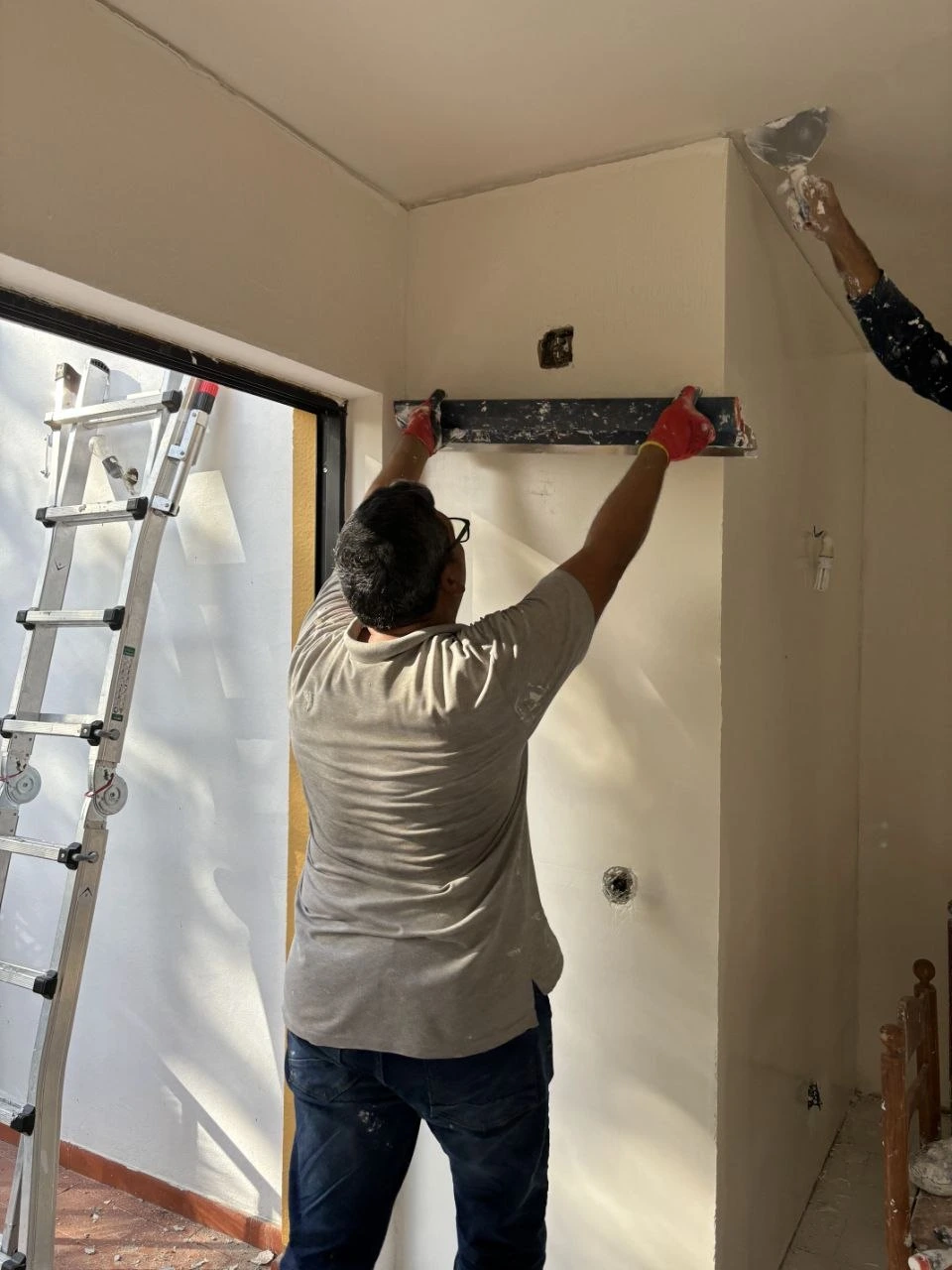
The accompanying Alfagar photograph shows wall-surface preparation in progress. It illustrates a stage of renovation where different questions may still need clarification; it does not document a hidden-services inspection or certify the condition of an installation. The practical value of an intermediate review comes from the specific question and supporting evidence, not from the appearance of a busy worksite.
Alfagar: wall-surface preparation in progress. Context photograph, not evidence of a hidden-services inspection or certified test.
A renovation can look busy while two trades wait for the same unanswered question. An installer needs a route, a joiner needs a dimension and a painter needs to know whether a surface will be opened again. A calendar may give each team a date without resolving any of those dependencies. Coordination starts by identifying the question that stops the next activity, who can answer it and when that answer is needed.
For an owner following a project from elsewhere, this is more useful than collecting separate progress messages. The aim is not to make every decision personally. It is to see which decisions need an owner response and which belong with the relevant designer, technical lead or contractor. The approach below is a proposed way to organise that discussion, not a claim that a photograph proves how a project was managed.
Map the shared space, not just the dates
Different trades may need the same wall, opening or service route. A kitchen island can involve water, drainage, electricity and extraction. An outdoor equipment position can affect access and the appearance of a wall. The relevant requirements depend on the project; a general sequence cannot replace the drawings, specifications or decisions of the responsible professionals.
For each shared location, identify what one trade needs from another. A useful question is specific: has the position been agreed, is a dimension still provisional, or does an inspection need to happen before access disappears? Avoid writing that everything is ready when only one part of the dependency has been resolved. The map should expose the unanswered question rather than turn a broad label into permission to continue.
Give each question one coordinating contact
A decision can spread through several conversations without reaching everyone affected. The owner agrees a change in one message, the installer uses an earlier drawing and the joiner arrives with dimensions from another discussion. Each person may be acting reasonably while using a different instruction.
An agreed coordinating contact can keep the current question and response together. That contact does not automatically become the person qualified to approve every technical detail. Record who supplies the information, who makes the relevant decision and which teams need the answer. A single contact point is useful because it reduces conflicting versions, not because it removes the responsibilities of the other participants.
Put a deadline beside the dependency
A delivery date and a decision deadline are different. A material may arrive next week while its size must be confirmed before another trade measures an opening. If the decision comes after that measurement, the calendar can remain unchanged on paper while the planned sequence no longer fits the work.
Ask when the answer becomes necessary and what happens if it is missing. The response might be to keep access open, postpone a measurement or ask the responsible professional to revise the sequence. Do not invent an arrival date to complete a planning sheet. An unconfirmed supplier date should remain unconfirmed, with its effect on the dependent activity visible to the people arranging it.
Include access and protection in the handover
Coordination includes the route through the building. A team may need to move equipment across a newly finished area or work beside a surface that must remain undisturbed. Ask which rooms are available, which route can be used and what protection is required before materials are brought inside.
Drying, curing and application conditions depend on the material and the relevant technical instructions. They should not be guessed from a generic timetable. A short access note can identify a restricted area and the person to contact, while the technical requirements remain with the appropriate documents and professionals. An owner visit also needs an agreed window rather than an assumption that any busy period is suitable.
Use a short decision list before the meeting
Before a coordination discussion, collect the questions that block a defined next action. For each one, include the location, the information missing, the coordinating contact and the point at which the answer is needed. Separate an owner choice from a technical check or a supplier confirmation. They may all affect the sequence, but they require different responses.
Consider a proposed change to a wall-mounted installation. The useful question is not simply whether the owner likes the new position. The affected teams may need a confirmed route, access and an updated reference before proceeding. This is an organisational example, not a technical instruction about installation. Recording the unresolved items prevents an aesthetic preference from being mistaken for a complete answer.
End with the next action, not a broad percentage
A coordination meeting should leave a short list of next actions that the relevant people can recognise. Confirm who will obtain an answer, where it will be recorded and which activity still depends on it. If the answer changes, retain enough context to explain why an earlier instruction is no longer current.
When discussing an Algarve renovation with Build It Now, asking about shared spaces, decision deadlines and coordinating contacts makes the conversation concrete. It keeps the focus on the interfaces between trades rather than treating a date as proof that a room is ready. One question, one coordinating contact and one required moment give a busy project a clearer point of reference.
Cover photograph: Alfagar project photograph, used as installation context only. It does not demonstrate the coordination process, a functional test or technical acceptance.
Edition: 3 November 2026. Published: 3 November 2026.
A material selection can go wrong even when everyone remembers liking the same sample. One person keeps a showroom photograph, another orders from a newer catalogue and a third receives a substitute described as equivalent. By installation day, the team may be discussing several versions of what was supposedly one decision.
The practical answer is not a larger image folder. It is one current selection record that distinguishes the appearance approved, the product intended for order and the material actually delivered. Keeping these links visible makes a proposed change easier to discuss before it becomes part of the work.
A sample, a reference and a batch do different jobs
A sample helps someone consider colour, texture and finish under particular lighting. A catalogue reference identifies the product being proposed. A delivered batch identifies what arrived. They are connected, but none is a complete substitute for the others.
Approving a sample does not establish that the eventual order uses the same reference. Ordering the intended reference does not remove the need to check the delivery against the agreed requirements. The project team must determine which checks matter for the actual material and application; a generic checklist cannot certify suitability.
A simple selection record can link the room or location, supplier reference, agreed finish and relevant supporting information. It should also make exclusions clear. A stone selected for a worktop is not automatically selected for the floor. A finish considered for an interior surface is not automatically suitable for an exposed exterior location.
Name the current record and its owner
When selections circulate through parallel messages, the active version becomes uncertain. Agree one place where the current decision is recorded, with the date and the person responsible for updating it. A proposed alternative belongs in the record as pending until the appropriate decision has been made.
When a change is accepted, retain the previous version and explain what changed. That history helps someone understand why a later order differs from the first sample photograph. It also avoids treating the most recent message in one conversation as an instruction that everyone else somehow received.
This is an organisational method, not a new contractual procedure. Any formal requirements for approvals, substitutions or changes remain those applicable to the particular project. The selection record should point to that process rather than compete with it.
Treat an alternative as a question, not a match
A stock shortage can prompt a supplier to suggest a similar product. Similar appearance is only part of the comparison. Dimensions, finish, substrate requirements and the intended application may differ. Ask the responsible project professionals which differences need assessment before a substitution is agreed.
Record the original reference and the proposed replacement side by side. Note why the alternative is being considered and who needs to decide. Without that comparison, an equivalent can become an undocumented change that is noticed only after adjacent work has been prepared.
The aim is not to prevent sensible alternatives. It is to ensure that the people affected can evaluate them with the same information instead of discovering the change through a delivery or an installed surface.
Check interfaces before the order becomes work
Materials meet other materials at corners, thresholds, edges and fittings. A selection made only from the middle of a sample board can leave those interfaces undecided. Where relevant, include the proposed joint, edge treatment or adjoining finish in the discussion.
If the support or adjacent work is already in place, a late change may affect more than appearance. It may require revised dimensions or additional work. Describe that consequence before treating the change as a minor taste preference. The relevant technical assessment belongs to the people responsible for the design and execution.
A sample viewed in a showroom can also look different in the room. Plan any useful on-site comparison before the final order, rather than presenting a later change of impression as evidence that the delivered product is necessarily wrong. Record uncertainty when the final viewing conditions are not yet available.
Use the next meeting to settle the version
For each open selection, confirm the location, current reference, finish and pending questions. Distinguish what has been selected from what has been ordered and what has arrived. Retain the superseded version, and make any proposed substitute visible before it is applied.
Build It Now works on renovation projects in the Algarve. An owner discussing materials with the team can use these questions to keep decisions specific without mistaking a photograph for a product specification. The method is proposed guidance, not a claim that a photograph proves which product was used.
The result should be one decision people can identify, not a catalogue reopened at every meeting. Clear version control lets the conversation focus on the change that actually needs a decision.
Cover photograph: Alfagar project photograph showing installed finishes as context. It does not identify a product reference, a delivered batch or technical approval of the materials.
To provide the best experiences, we use technologies like cookies to store and/or access device information. Consenting to these technologies will allow us to process data such as browsing behaviour or unique IDs on this site. Not consenting or withdrawing consent, may adversely affect certain features and functions.
Functional
Always active
The technical storage or access is strictly necessary for the legitimate purpose of enabling the use of a specific service explicitly requested by the subscriber or user, or for the sole purpose of carrying out the transmission of a communication over an electronic communications network.
Preferences
The technical storage or access is necessary for the legitimate purpose of storing preferences that are not requested by the subscriber or user.
Statistics
The technical storage or access that is used exclusively for statistical purposes.The technical storage or access that is used exclusively for anonymous statistical purposes. Without a subpoena, voluntary compliance on the part of your Internet Service Provider, or additional records from a third party, information stored or retrieved for this purpose alone cannot usually be used to identify you.
Marketing
The technical storage or access is required to create user profiles to send advertising, or to track the user on a website or across several websites for similar marketing purposes.