Returning keys and temporary access after renovation
Published on 11 November 2026
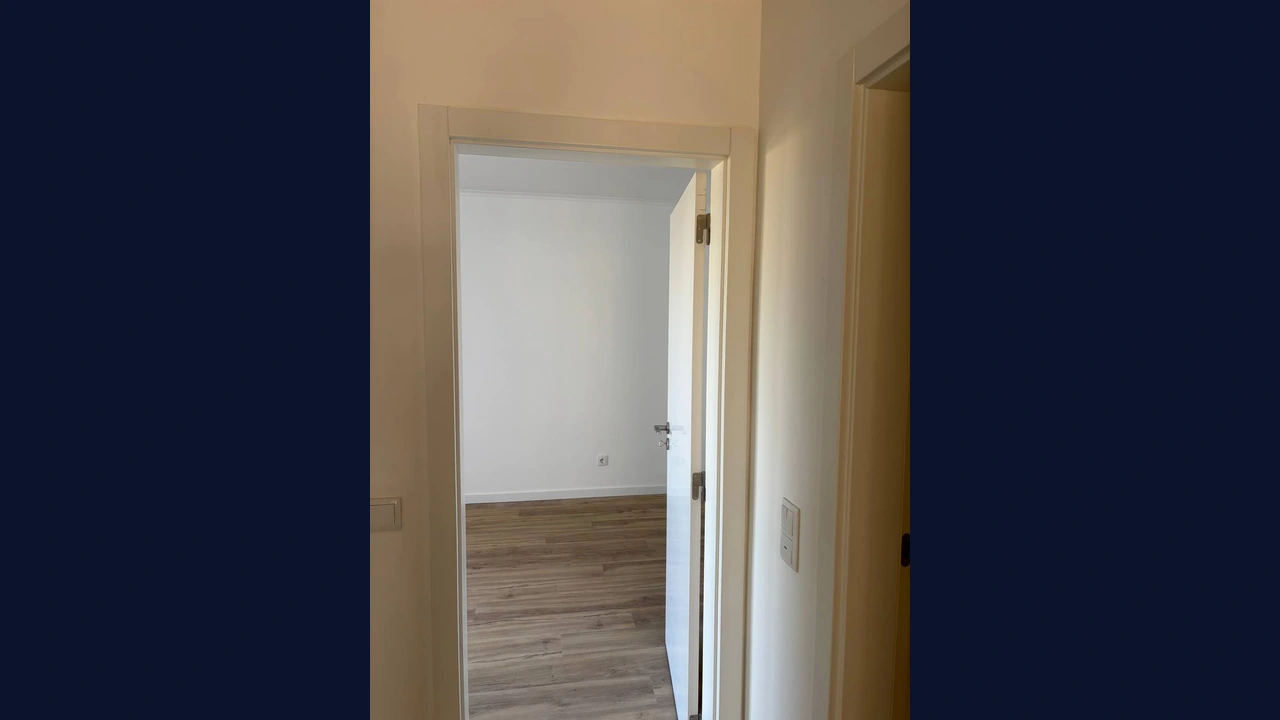
Alfagar interior doorway, shown as architectural context only; not evidence of a lock type, access specification or security performance.
The building work may be drawing to a close, but access to the property can still be unclear. A neighbour holds a spare key, a temporary code was shared in a message, and a remote control has been left in a drawer. Unless someone brings those details together, the owner receives a collection of objects without a reliable account of who can use them.
Treat the return of access as a separate handover conversation. It is not the same as inspecting finishes or collecting product documents. The aim is to identify the access arrangements that exist, who is authorised to manage them, and which questions remain unresolved. The following is a proposed organising method, not a statement that every renovation includes electronic access or a particular security service.
Identify each access point before counting keys
Start with the property entrance and list any other relevant access points: a pedestrian gate, a garage, a shared entrance or a locked storage area, where present. Use descriptions the owner will recognise. A key labelled only with an unexplained number is difficult to place when the person who labelled it is no longer on site.
Record the type of item associated with each point, such as a physical key, remote control or account-managed credential. Do not assume that one key operates every door or that a remote supplied with an appliance controls the building entrance. The list should describe what has been identified, not infer capabilities from appearance.
Separate possession from authority
Holding a spare does not necessarily mean a person may authorise further copies or change an access setting. Ask the owner to identify who can make those decisions. Where the entrance belongs to a shared building, establish which questions must go to the building representative rather than treating the apartment owner as the administrator of every system.
A temporary site contact may have held access during the works without being intended as a permanent keyholder. Record that distinction before the contact arrangements change. For an owner living outside the Algarve, nominate a person who can receive the items locally, while making clear whether that person is collecting them or has authority to approve changes.
Use a hypothetical return list to expose gaps
Consider a hypothetical owner who expects two keys and a garage remote at handover. The person collecting them receives the two keys, but the remote is still with a site contact. Instead of marking access as complete, the return list identifies the missing item and the person who will clarify its location.
A second question concerns a code previously shared with a delivery contact. The owner asks the authorised system administrator whether that credential is still active and how temporary access should be ended. The list preserves the question without pretending that the collector can inspect the system or that returning the keys automatically revokes every other form of access.
Keep the return record separate from the secrets
A shared handover note can record that a code or account needs attention without containing the code itself. Avoid placing working credentials, photographs of key details or personal access information in a broadly shared snagging list. Agree an appropriate private route for any sensitive information that the owner actually needs to receive.
For account-managed equipment, ask who currently holds administrative control and what the authorised transfer procedure requires. Do not assume that receiving an app invitation transfers ownership of the account. Use the relevant provider or qualified installer for system-specific instructions rather than improvising a reset that might affect another user or shared equipment.
Agree a controlled demonstration
Where a demonstration is appropriate, have the responsible person show the owner how the identified access item is used. Keep a working route back into the property and avoid experimenting with unfamiliar controls. An item that has not been demonstrated should remain identified as unverified; appearance alone is not enough to call it functional.
The Alfagar photograph accompanying this article shows a finished doorway as architectural context. It does not establish the type of lock, the number of keys, any access-control specification or the security of the property. Those details need to be established for the actual project rather than inferred from a finished interior photograph.
Close the conversation with named actions
Review which items have been returned, which remain outstanding and which require an administrator’s response. Assign a contact and an agreed next step to each open question. Keep the record private enough for its contents and do not mark it complete merely because the wider renovation meeting has ended.
A clear return of access helps an owner understand what has changed between a working site and their own property arrangements. It does not certify security or replace contractual handover procedures. For an Algarve renovation enquiry, contact Build It Now to discuss the project scope and the coordination questions that should be addressed before the works conclude.
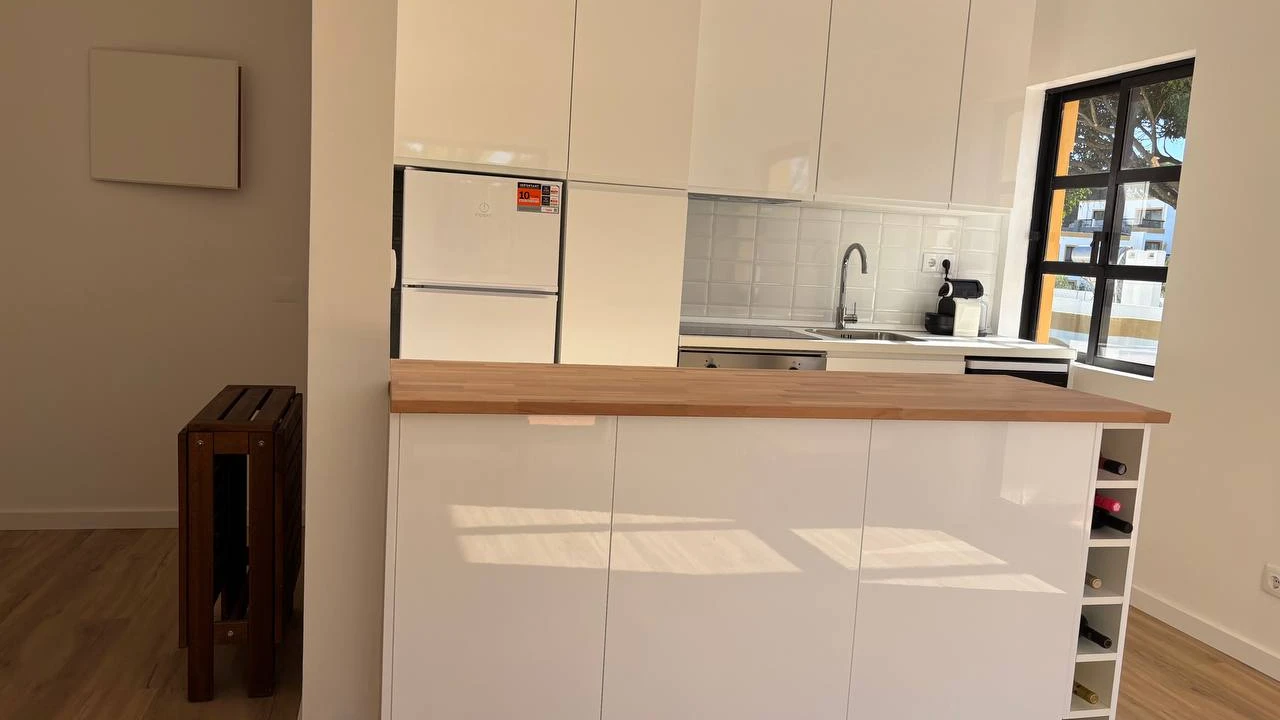
Alfagar kitchen, shown as architectural context only; not a surveyed delivery route or evidence of a handling method.
A supplier confirms that a kitchen appliance is available, but one practical question remains unanswered: can its delivery package reach the place where it needs to wait? A product width copied from a catalogue is not necessarily the width of its packaging. A clear doorway is only one point along a route that may include a gate, a turn, a stair landing and a shared entrance.
Before ordering bulky materials for an Algarve renovation, bring those questions into the delivery discussion. The aim is to identify missing information before a vehicle is booked, not to design a lifting operation yourself. The appointed delivery team and the people managing the works need to assess the actual item and site conditions.
Ask for the delivery package, not just the product size
Request the supplier’s transport information for the exact item being ordered. Ask about packed dimensions, weight, pallet or crate arrangements and any handling restrictions supplied with the goods. Keep that information distinct from the dimensions used to design the finished installation. Both matter, but they answer different questions.
For example, a hypothetical appliance might fit its intended kitchen recess while arriving in packaging that cannot follow the assumed route. That does not establish that removing the packaging is an acceptable solution. Ask the supplier and appointed handlers what the permitted arrangements are before treating an unpacked measurement as a delivery plan.
Describe the route from the vehicle to the holding area
Identify where the vehicle is expected to stop and where the delivery service ends. Ask the supplier whether its offer covers unloading, movement beyond the property boundary, movement upstairs or only a specified external drop-off point. Do not assume that the word delivery includes all of those activities.
Then describe the proposed route with the people assessing it. Gates, steps, corners, overhead restrictions and changes in level can matter as much as the final doorway. Measurements and photographs can help them understand the question, but they do not establish floor capacity, safe handling or permission to use a shared space. Those points need the relevant assessment and confirmation.
Resolve shared-space questions before booking
Where access crosses a condominium or another party’s land, ask the building manager or relevant owner which arrangements apply. Check the actual rules rather than assuming that a delivery slot, lift or communal corridor is available. If the proposal involves equipment or unloading on public space, ask the responsible project professional or local authority what permissions are needed.
A preferred date is not an agreed access arrangement. Record what has been confirmed, what remains unresolved and who is obtaining the answer. Avoid booking an irreversible transport commitment on the strength of a message that only confirms stock availability.
When discussing an Algarve renovation with Build It Now, bring the supplier’s delivery description and the access questions to the project conversation. That gives the discussion a concrete starting point without assuming that transport, unloading or storage is included in a particular quotation.
Choose somewhere the delivery can wait
The final installation position may not be ready when goods arrive. Ask where the packaged items can be held, who will assess the proposed location and what conditions the manufacturer specifies for storage. Keep circulation and emergency routes available. Do not treat an empty room or terrace as suitable simply because it appears to have spare space.
Consider the next deliveries as well. An early crate can block the route needed by a later one, while packaging may occupy space after the goods are moved. Discuss how that material will be removed and who is responsible. The practical question is whether the proposed holding area works within the actual sequence, not whether every order can arrive as soon as it becomes available.
Confirm the receiving contact and the handover point
Agree who will be present, how the driver can contact them and what should happen if access differs from the confirmed information. The receiving person needs the order reference and the delivery arrangements, rather than only a product photograph. Ask the supplier how shortages, visible transport damage or an unsuccessful delivery should be reported under its terms.
Keep a short delivery note linking the item, package information, agreed drop-off point, receiving contact and unresolved questions. It should direct the right people to the information they need, not introduce a homemade handling method. If the supplier changes the package or vehicle arrangement, ask whether the access assessment needs updating before confirming the slot.
Keep the finished photograph in perspective
The accompanying Alfagar photograph shows an installed kitchen with white cabinets and a timber-toned peninsula. It provides context for thinking about bulky renovation deliveries; it is not a surveyed access route, a record of how these items arrived or evidence of a safe handling method.
The useful result of preparation is a delivery that has a defined destination and confirmed responsibilities, with unresolved access questions made visible before booking. To discuss your property and proposed works, contact Build It Now with the scope and the supplier information already available.
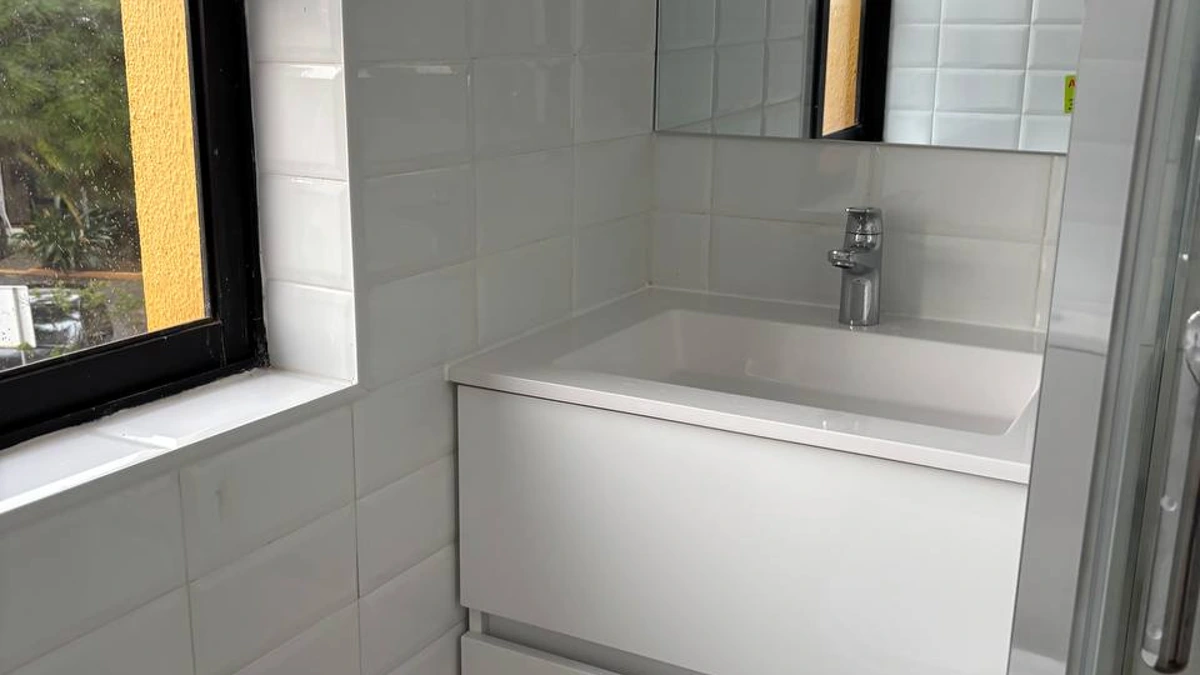
Alfagar bathroom detail, shown as architectural context only; not evidence of quotation scope or technical performance.
Two renovation quotations arrive with different totals, but it is not yet clear whether they describe the same work. One includes an item that the other leaves for later clarification. A material selection may be settled in one proposal and remain an allowance in another. Comparing the final sums before identifying those differences can answer the wrong question.
The useful first step is to establish what each quotation actually covers. The following comparison method is a planning suggestion for property owners, not a contractual assessment or a promise about any particular contractor’s documentation. Its aim is to turn unclear boundaries into questions that can be answered before a decision.
Start with one shared description of the project
Keep the brief, drawing references and selection notes that each contractor received. If different versions went to different people, record that discrepancy before comparing their responses. A change in the requested scope can explain a difference in the proposals without saying anything about the quality of either business.
List the areas and activities that matter to your project. For a bathroom, that might include removing existing fittings, preparing surfaces, supplying selected items, installation and clearing the work area. These are comparison headings, not a specification for how the work should be carried out. Technical requirements need to be defined with the appropriate project professionals.
Separate described work from items awaiting a decision
For each heading, copy the wording or a precise reference from each quotation. Distinguish a clearly described inclusion, an explicit exclusion, an allowance and an item that is not mentioned. An omission is a question to resolve, not proof that the contractor intends to charge extra or has deliberately lowered the total.
Where an allowance appears, ask what it includes and how a later selection would affect the proposal. Is the amount for supply only, or does it include installation and associated work? Which selection or quantity underlies it? Use the answer to understand the comparison rather than treating every allowance as though it described an identical product.
Use a hypothetical mismatch to test the comparison
Imagine two proposals for a bathroom alteration. One expressly includes supplying a mirror and fitting it. The other mentions fitting a client-supplied mirror but says nothing about purchasing it. Their totals cover different responsibilities. The comparison should show that boundary before the owner decides which proposal better matches the intended project.
The same example can raise another question: does either description include the agreed lighting connection around the mirror? Do not assume that it does because a finished bathroom photograph shows lighting. Ask for the intended scope to be confirmed. This hypothetical example illustrates a reading method; it is not a case history, a cost calculation or a recommended technical solution.
The Alfagar photograph accompanying this article shows a completed bathroom detail as architectural context. It does not establish what was included in a quotation, which products were specified or how any contractual responsibility was allocated. A photograph and a written scope answer different questions.
Make interfaces and exclusions visible
Look for responsibilities that sit between headings: access arrangements, protection of retained finishes, delivery handling and removal of waste, where relevant to the project. Ask which party is responsible and where that responsibility is recorded. Do not infer that every possible item must be included in every renovation proposal.
Check whether the descriptions use the same quantities, locations and drawing revisions. A line referring to one wall cannot be compared directly with a line covering the whole room. Where the wording remains broad, ask for the physical start and end of the work to be described. Keep the original text alongside the clarification so that a paraphrase does not silently change its meaning.
Read commercial conditions without turning them into a score
Review how the proposal describes payment stages, validity, changes and items still to be agreed. Note the questions you need answered and seek appropriate advice where the implications are unclear. A clear description makes discussion easier, but it does not by itself prove that a contract is balanced or that a contractor will perform well.
Avoid ranking proposals through a homemade points system that hides unresolved differences. It is more useful to record that an inclusion is confirmed, an alternative remains open or a condition needs professional review. A total should remain attached to the scope and conditions that produced it, rather than being copied into a comparison without those qualifications.
Ask for a comparable revision before choosing
Send a concise list of clarification questions and identify the quotation version to which they refer. When a response changes the scope, request a revised document or a clearly linked written clarification. Keep earlier versions available without treating them as current. You should be able to explain which proposal and which answers support the decision.
Build It Now can be contacted to discuss an Algarve renovation brief. Preparing a consistent description of the intended work makes that conversation more concrete. The purpose of this exercise is not to make every quotation identical, but to understand the differences before deciding what to commission.
Alfagar exterior detail, shown as architectural context only; not evidence of a decision dossier or technical performance.
A renovation can leave a well-finished space and a scattered record of how it became that way. Product references sit in messages, a drawing is attached to an old email, and photographs have filenames that mean nothing to the person who later needs a replacement part. The difficulty appears when a future question must be answered without reconstructing the whole project.
A final decision dossier can make that search more manageable. This is a proposed filing method, not a statement that every renovation includes the same documents or that a folder replaces professional inspections, contractual acceptance or legal requirements. Its purpose is narrower: help someone find the basis of a past choice and distinguish it from proposals that were never adopted.
Start with the question a future reader will ask
An archive organised only by the date files arrived is easy to fill and difficult to use. A future owner may need to know which finish was selected, where a component reference is recorded or why a proposed detail changed. Those questions point to subjects and locations, not necessarily to email dates.
Begin with a short index using familiar room and component names. Keep the naming consistent with the drawings available for the project. The index should direct the reader to a record; it should not claim to verify a hidden installation or certify that a particular product was used. Where information is missing, record the gap rather than replacing it with an assumption based on a photograph.
Separate the adopted choice from the alternatives
An early proposal and a later selection can both be useful records, but they should not look equally current. Give each decision a brief subject, the date recorded and a reference to the message, drawing or document supporting its status. Keep discarded alternatives in a separate history when they explain the choice, rather than mixing them with the active reference.
For example, a hypothetical finish change might have a sample photograph, a supplier reference and a written confirmation. Store the connection between those items. A photograph alone may show colour and appearance without identifying the exact product. If confirmation is absent, label the entry as unresolved instead of treating the most attractive image as evidence of the final specification.
Connect references without making the index a second archive
A useful index does not need to duplicate every document. It can point to the current file, its location and the subject it supports. Duplicate copies create another question later: which copy should be used? If there is a reason to keep an earlier issue, identify it as history and preserve its link to the later record.
Use filenames that remain understandable outside the original email thread. A room, subject and issue date may be enough when the folder structure already supplies the project context. Avoid including personal details that the next reader does not need. Before sharing a folder, review access and remove unrelated attachments rather than assuming that everything collected during the works belongs in the handover archive.
Keep photographs as context, with their limits visible
Photographs help a reader recognise a location, finish or visible detail. Their usefulness increases when each one has a short description and an identifiable subject. A wide view can establish context, while a closer view may help locate the feature mentioned in a drawing or note. Neither view automatically proves what lies behind a surface.
The cover photograph shows an exterior architectural detail from the Alfagar image collection: white walls, ochre trim and projecting dark timber beams. It provides visual context for organising renovation records. It does not show a completed dossier, confirm a technical specification or demonstrate the performance of any material or assembly.
Give open questions their own place
A decision archive should distinguish a missing reference from a defect observed on site. Those are different problems with different next steps. One entry might need a product document; another might need clarification from a qualified professional. Combining both under an unexplained label such as pending makes it harder for a future reader to know what action is appropriate.
For each open question, record what is missing, where the question arose and who should be contacted to clarify it. Do not imply that assigning a name establishes liability or guarantees an answer. The file is a way to preserve the question and its supporting material, not to replace the project participants’ responsibilities or the procedures applicable to the works.
Test retrieval before calling the archive useful
Ask someone unfamiliar with the folder to locate a specific adopted finish and the document that supports it. Then try a second question about an unresolved reference. If the person reaches several plausible files with no way to choose, improve the index and status labels before adding more material. The test is about finding information, not approving construction quality.
Keep a read-only copy of the assembled archive and a clearly identified place for later additions. That separation helps preserve what was available at the time without preventing the record from improving. For a renovation enquiry, Build It Now can discuss the project context with you; agree the scope and available documentation directly rather than assuming that this proposed filing method is a standard contractual deliverable.
Alfagar detail, shown as context for identifying a renovation question; not evidence of technical performance or an agreed decision.
“Could we use a different shelf?” sounds like a simple renovation question. Read quickly in a message thread, it can also look like a request to change the work. The owner may only be exploring an option while someone else thinks a decision has been made. Written questions help when they make that distinction explicit, not merely when they preserve a conversation.
This guide focuses on the boundary between asking, expressing a preference and giving an instruction. It does not establish contractual approval rules: those depend on the project agreement and the people authorised to make decisions. Its purpose is to help an owner write a question that another person is less likely to mistake for a settled choice.
Say whether you are exploring or deciding
Start by naming the purpose of the message. “I am asking about an option; I am not requesting a change yet” communicates something different from “Please record this as my selection, subject to the agreed approval process.” The wording should reflect what you actually intend. A conversational question mark does not always make that intention clear.
Consider the sentence “Would a deeper shelf work here?” It might concern appearance, suitability or whether a revision is possible at all. State which point you want explained before asking anyone to act. This is an illustrative example, not advice about shelf dimensions or evidence that a particular project required a change.
Identify the detail without claiming what a photo proves
A photograph can locate the subject of a question. Include the room and the visible element so that the recipient does not have to infer them from a close-up. If you have marked an image, explain what the mark identifies. A circle around an area is not a drawing specification or a complete instruction.
The photograph here shows a white shelf or projection against white tiled walls at Alfagar. It is used as context for identifying a visible detail, not as evidence that a question was raised or resolved on that project. It does not demonstrate waterproofing, hidden construction or technical performance. Those matters require appropriate information beyond the photograph.
Distinguish a preference from a request to proceed
An owner can prefer an alternative while still needing to understand its implications. Write the preference separately from the unresolved questions. “I prefer the appearance of option B, but I need clarification before deciding” is more informative than a short message saying “B looks good”. The second version leaves the status open to interpretation.
Do not assume that a favourable comment authorises ordering, installation or a revised scope. Refer to the process agreed for the project and ask the appropriate person to explain what a formal decision would require. This organisational distinction does not determine the legal effect of a message; if that effect is uncertain, obtain suitable advice rather than relying on a template sentence.
Ask what an answer actually confirms
A reply may answer only one part of a question. “It is available” concerns availability, not necessarily suitability. “We can discuss it” is not agreement to change the work. If the answer is narrower than the question, ask about the remaining uncertainty instead of treating the whole subject as settled.
Build It Now works on renovation projects in the Algarve. When discussing a possible revision, ask how exploratory questions should be distinguished from confirmed decisions for that project. The method described here is a proposed communication practice, not a claim that every Build It Now agreement contains a particular approval system or that every message has the same contractual effect.
Correct an ambiguous message explicitly
If you notice that a question may have been read as an instruction, clarify it promptly with the people concerned. Refer to the actual message and explain your intended meaning. Do not silently edit an earlier exchange and assume everyone will see the change. Someone may already have read or forwarded the original wording.
Ask whether any action has followed and what needs to be checked next. Avoid promising that a clarification reverses an order, removes a cost or changes an obligation. The practical and contractual consequences need to be assessed through the agreed arrangements. Your immediate aim is to make the misunderstanding visible rather than to declare it harmless.
Finish with the status, not just a friendly reply
At the end of the exchange, write what remains undecided. The status might be “option being explored”, “awaiting an explanation” or “decision to be recorded through the agreed process”. Use wording the relevant people understand. A thumbs-up or “thanks” can acknowledge receipt without making clear whether a choice has been made.
Clear questions do not replace professional judgement or project agreements. They make the owner’s intent easier to understand before a discussion becomes an assumed instruction. To discuss an Algarve renovation with Build It Now, describe the property and intended scope, and separate the ideas you are exploring from decisions you have already made.
To provide the best experiences, we use technologies like cookies to store and/or access device information. Consenting to these technologies will allow us to process data such as browsing behaviour or unique IDs on this site. Not consenting or withdrawing consent, may adversely affect certain features and functions.
Functional
Always active
The technical storage or access is strictly necessary for the legitimate purpose of enabling the use of a specific service explicitly requested by the subscriber or user, or for the sole purpose of carrying out the transmission of a communication over an electronic communications network.
Preferences
The technical storage or access is necessary for the legitimate purpose of storing preferences that are not requested by the subscriber or user.
Statistics
The technical storage or access that is used exclusively for statistical purposes.The technical storage or access that is used exclusively for anonymous statistical purposes. Without a subpoena, voluntary compliance on the part of your Internet Service Provider, or additional records from a third party, information stored or retrieved for this purpose alone cannot usually be used to identify you.
Marketing
The technical storage or access is required to create user profiles to send advertising, or to track the user on a website or across several websites for similar marketing purposes.